


Among the myriad of commercial VST plug-ins produced by large foreign software houses, there is an independent Italian developer, Guido Scognamiglio, who makes available on his website www.soundfonts.it a complete suite of VST plug-ins between virtual instruments and effects which reproduces very famous vintage instruments such as a Hammond organ (ORGANized trio), a Rhodes piano (MrRay SeventyThree), a Wurlitzer piano (MrTramp), a Leslie (MrDonald) and a multi-effects (Effectizer).
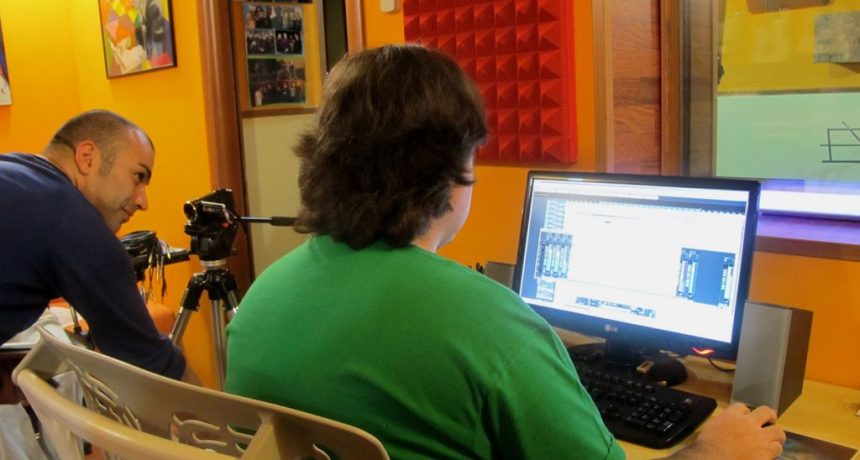
We met him in person in a Neapolitan restaurant and then we were invited to his private studio to get some information about his products which, according to our tests, have nothing to envy to the most famous competitors.
Anthony Campeglia: Why is your site called SoundFonts.it? Is there a link between soundfonts and VST plug-ins?
Guido Scognamiglio: No connection, the site still bears that name because it was opened in 2000, when soundfonts began to become famous even in the professional field, so I had the idea of creating a sort of community aimed at exchanging free soundfonts and other activities, but then over time the community has disappeared and the site has kept the name just to be able to take advantage of its popularity. VST plug-ins came next.
HUNGRY: But the site is entirely written in English, why?
GS: Because the greatest turnout comes from abroad. Writing it only in Italian would have been a big limitation.
HUNGRY: And how did you come up with the idea of producing these plug-ins? Weren't similar products already on the market before you even started development?
GS: Yes, something was already there, but I liked the idea of being able to create something of my own for my needs. So I started with Hammond's simulator, ORGANized trio, which is always in continuous improvement. Then the passion for Rhodes was born, then for the Wurlitzer… I was also thinking about a Clavinet D6 but I'm not ready for that yet!
AC: And what do the plugin names come from?
GS: ORGANized trio comes from "ORGANized" which was the title of an old record by my father that I often listened to as a child, played entirely on the Hammond by Chris Waxman; "trio" refers to the upper / lower / pedals structure. "MrRay" in honor of the great Ray Charles ... mythical scene in the Blues Brothers movie in which he shows an old Suitcase 88 to the band. "MrTramp" is obviously inspired by SuperTramp, the group that made the Wurlitzer plan famous. "MrDonald" in honor of the genius of Don Leslie, who invented the rotating speaker.
AC: Why did you choose the synthesis with physical models and not samplings or hybrid systems?
GS: For two fundamental reasons: first, because sampled libraries often need a sample reader, which entails an additional cost; second, because with physical models you can shape the sounds to your liking, which is impossible to do with sampling. And with the right technique, excellent results can be achieved.
AC: So your profession is that of a programmer?
GS: Yes, but more precisely I program for the web, in particular I create and manage e-commerce solutions. DSP programming is more of a hobby than anything else, and I'm no real expert. I have been programming since the VIC20 era and have always been passionate about it.
ORGANized trio
Let's now turn to the tests. All plug-ins have been tested in Jorgen Aase's excellent EnergyXT ( www.xt-hq.com ) on a 4MHz Pentium2800 PC with 1Gb of ram and a midi masterkeyboard. The first plugin we tried is "ORGANized trio", the simulator of the legendary electrophone invented by Laurens Hammond in the '30s (fig. 1 - the ORGANized trio interface shows the three sets of drawbars and all controls related to percussion, vibrato / chorus and the built-in Leslie bass drum simulator). The first preset reproduces the typical sound used by the great Jimmy Smith, very jazzy, and the first impression was that of being in front of a very convincing Hammond clone. The drawbars act just like in the real instrument, and each "manual" can be assigned the respective MIDI channel (by default, upper is on channel 1, lower on 2 and pedals on 3) so you can play it like a real B3 if you have 2 masterkeyboards and a midi pedal board. On the upper it is possible to activate the percussion, choose the harmonic, the decay time and the volume. The six Chorus / Vibrato settings are well marked and the keyclick adds that aggressive attack great for rhythms and slides. On the left of the interface there is an Overdrive section, to obtain rock sounds typical of Deep Purple, Emerson Lake & Palmer, and the great rock bands of the 60s and 70s. Leslie's simulator has a circular and enveloping sound when in slow mode, rich and effective when in fast mode; the transition from one speed to another is truly realistic and all parameters are freely adjustable. In the control panel of the plugin, which can be activated by clicking on the "hook" next to the Leslie controls box, you can set some important parameters including the possibility of inverting the response of the drawbars to the midi control changes, so that the faders of our midi controller are they move in the same direction as the drawbars (i.e. down = maximum volume and vice versa); another important parameter is the possibility of excluding the drawbar 1 'when the percussion is activated, just as it happens in a real Hammond, a limitation due to the circuit diagram of the instrument. Finally, it is possible to adjust the overall attenuation of the drawbars and the amount of "leakage", ie the harmonic disturbance present in the tone wheel generator of a real organ. The fundamental aspect of ORGANized trio is its sound character, which in addition to being sweet and aggressive when needed, also knows how to get noticed well when inserted into a mix. The possibilities of adjusting the overall timbre are many and there is no risk of having a sound that remains too "behind". In short, in this simulator there is just everything, even the graphics are very reminiscent of the elegant and professional structure of the legendary Hammond.
Producer: SoundFonts.it
Model: ORGANized trio
Website: www.soundfonts.it
Price: Donationware (minimum 15 euros)
dotazione: 6
Proven Reliability: 6
Yield: 6
Quality price: 6
Pro: Great sounds, low cpu consumption
Cons: Absence of total polyphony
Global: 6
Mr Ray Seventy Three
This is a physical model simulator of the legendary Rhodes piano, precisely of a Mark I seventythree, the 73-key one. The author preferred to simulate the sound of the Rhodes as it comes out of the instrument's jack, without particular equalizations or additional speaker simulations. For this reason, it is easy to create your own sound by cascading external effects into the output of this VSTi. First of all, it must be said that to be a simulation based on physical models, the result is truly amazing: at first glance the impression was that of listening to samples, because the timbre changes slightly from note to note, exactly like in a real Rhodes, but the he use of physical model synthesis breaks down the limit of dynamics that sampling often imposes: here the dynamics are total, 127 levels! The front controls are simple and essential (fig. 2 - MrRay SeventyThree, few but essential controls) and allow you to slightly modify the sound by acting on the mechanical elements of the piano: SHOES regulate the hardness of the hammers, TINES they regulate the metallic noises, with the controls TONEBARS you can change the decay and release times. A display at the top right indicates the dynamic response curve in use, selectable from Normal, Hard e Linear.
The polyphony is 32 voices, sufficient even for busy arpeggios, but nonetheless CPU usage is very low: on our computer we recorded a maximum peak of 20% with all the polyphony notes engaged.
A point against MrRay SeventyThree lies in the dynamics, but perhaps it is not the fault of the simulation but of the master keyboards: the dynamics of a real Rhodes piano is much more extended, to the point that hitting a key with excessive force you can hear the hammer hitting the tonal bar almost without producing any notes. Unfortunately, the midi protocol is still 8-bit and, for certain applications, it clearly shows its limits.
Producer: SoundFonts.it
Model: Mr Ray Seventy Three
Website: www.soundfonts.it
Price: Donationware (minimum 15 euros)
dotazione: 6
Proven Reliability: 6
Yield: 6
Quality price: 6
Pro: Fair simulation, low cpu consumption
Cons: Absence of presets
Global: 6
Mr Tramp
Who doesn't know SuperTramps? Mythical group of the 70s that brought an instrument like the Wurlitzer plan to success. For the uninitiated, the Wurlitzer is an electric piano very similar to the Rhodes but with a different principle: while in the Rhodes the hammers strike metallic tonal bars making them vibrate in front of magnetic pickups, in the Wurlitzer the sound is generated by the so-called "reeds. ", that is metal plates very similar to those vibrating in an accordion or in a mouth harmonica. MrTramp, like MrRay SeventyThree, mimics this tool almost perfectly through the use of physical models. The interface is very similar to that of his brother Rhodes (fig. 3 - MrTramp, layout very similar to MrRay73), same screen size and same positioning of controls. Also in this case, the imitation of the real instrument is taken care of in the smallest details, such as the fact that the last 5 notes (from G # of the fifth octave to the last C) do not stop when the keys are released, because in a real Wurlitzer 200 these keys do not have the "dampers" (the felts that stop the vibration of the reeds). The controls are roughly the same as MrRay73, but here in addition there is the built-in tremolo effect, with a fixed speed at 6 Hertz as in the real instrument. Also for MrTramp the polyphony is 32 voices and the CPU consumption is very low.
Producer: SoundFonts.it
Model: MrTramp
Website: www.soundfonts.it
Price: Donationware (minimum 15 euros)
dotazione: 6
Proven Reliability: 6
Yield: 6
Quality price: 6
Pro: Great sounds, low cpu consumption
Cons: Absence of presets
Global: 6
Effectizers
This is the turn of a VST Effect to use in insert. Effectizer has been specifically designed to be combined with MrRay SeventyThree or MrTramp (but it is also excellent for many other applications) and provides a simple speaker simulation, a Wah-Wah effect, a distortion, a mono or stereo tremolo, a modulation effect selectable between chorus or phaser, a stereo delay and a reverb. The strong points of this effect are the phaser and the tremolo: the first is a 2-stage stereo phaser, very similar to the legendary MXR90 (the stomp-box very used in the '70s in combination with a Rhodes piano), while the second reproduces to perfection the stereo tremolo of the Rhodes pianos from the Suitcase series. Combining Effectizer with MrRay SeventyThree you can have an infinity of different timbres. Also for Effectizer the interface is very intuitive (fig. 4 - Effectizer shows the controls in a simple and easy to use sequence), the effect controls are placed in their concatenation order. The reverb effect isn't as great as the digital reverbs we're used to hearing in studio applications, but it's more than enough for a keyboard sound. The interesting thing is the possibility of switching between a "Vintage stereo reverb" and a simulation of "Spring reverb", that is, the one invented by Laurens Hammond and still used today in electric guitar amps.
Another interesting point is the speaker simulator, which can be activated and adjusted through a single knob positioned at the top center of the interface with the words Amps: instead of having a choice between various types of loudspeakers and amplifiers, turning this knob gradually switches from one sound to the other, going from a typical 4-cone Marshall sound to a softer Vox ... however these are approximate simulations.
The touch of professionalism, on the other hand, is given by the possibility of synchronizing the delays and LFOs to the host clock. When this function is active, transparent pop-up windows appear showing the value of the relative adjustments in terms of metric divisions (1 bar, 1/4, 1/8, etc.).
Producer: SoundFonts.it
Model: Effectizers
Website: www.soundfonts.it
Price: Donationware (minimum 15 euros)
Pro: Good phaser and tremolo effects
Cons: Unconvincing Wah-wah and distortion effects
Global: 5
MrDonald
The nice thing about this VST plugin is the interface: it shows the interior of a Leslie speaker in action, and the bass and treble speakers rotate in sync with the effect produced! (fig. 5 - MrDonald's interface) It is, in fact, a tribute to Donald Leslie, the inventor of the homonymous amplifier for electronic organ still used by the Hammondists.
The features and sound are the same as those found in the Rotary Speaker section of the ORGANized trio.
Producer: SoundFonts.it
Model: MrDonald
Website: www.soundfonts.it
Price: Freeware
Conclusions
We took a dip in the past, enjoying listening to and playing the most beautiful instruments of the 60s and 70s on our digital workstation. Although we were used to the "big names" of music software, this time we had the proof that even with a lot of passion and technical preparation it is possible to obtain noteworthy results. And the biggest satisfaction is that they are Italian products! But the thing that makes this suite unbeatable is undoubtedly the price: all SoundFonts.it VST plugins are distributed in Donationware form, so if you make good use of it, don't forget to show the author all your gratitude. ! On the site you will find a PayPal button with which you can request your personal registration code.
Among the myriad of commercial VST plug-ins produced by large foreign software houses, an independent Italian developer, Guido Scognamiglio, appears, who makes available on his website www.soundfonts.it a complete suite of VST plug-ins including virtual instruments and effects that reproduces very famous vintage instruments such as a Hammond organ (ORGANized trio), a Rhodes piano (MrRay SeventyThree), a Wurlitzer piano (MrTramp), a Leslie (MrDonald) and a multi-effects (Effectizer).
We met him in person at a Neapolitan restaurant and were later invited into his private studio to get some information about his products, which, according to our tests, are just as good as those of their more renowned competitors.
Antonio CampegliaWhy is your website called SoundFonts.it? Is there a connection between soundfonts and VST plug-ins?
Guido Scognamiglio: No connection, the site still has that name because it was opened in 2000, when soundfonts were starting to gain popularity even in professional settings. So I had the idea of creating a sort of community aimed at exchanging free soundfonts and other activities, but then over time the community disappeared and the site kept the name only to capitalize on its popularity. VST plug-ins came later.
ACBut the site is entirely written in English, why?
GSBecause the largest turnout comes from abroad. Writing it only in Italian would have been a major limitation.
AC: And how did the idea for producing these plug-ins come about? Weren't there similar products on the market before you even started developing them?
GSYes, there was already something, but I liked the idea of being able to create something of my own for my needs. So I started with the Hammond simulator, ORGANized trio, which is constantly being improved. Later, I developed a passion for the Rhodes, then the Wurlitzer... I was even thinking about a Clavinet D6, but I'm not ready for that yet!
AC: And what do the plugin names come from?
GS: ORGANized trio comes from "ORGANized" which was the title of an old record by my father that I often listened to as a child, played entirely on the Hammond by Chris Waxman; "trio" refers to the upper / lower / pedals structure. "MrRay" in honor of the great Ray Charles ... mythical scene in the Blues Brothers movie in which he shows an old Suitcase 88 to the band. "MrTramp" is obviously inspired by SuperTramp, the group that made the Wurlitzer plan famous. "MrDonald" in honor of the genius of Don Leslie, who invented the rotating speaker.
AC: Why did you choose the synthesis with physical models and not samplings or hybrid systems?
GS: For two fundamental reasons: first, because sampled libraries often need a sample reader, which entails an additional cost; second, because with physical models you can shape the sounds to your liking, which is impossible to do with sampling. And with the right technique, excellent results can be achieved.
AC: So your profession is that of a programmer?
GS: Yes, but more precisely I program for the web, in particular I create and manage e-commerce solutions. DSP programming is more of a hobby than anything else, and I'm no real expert. I have been programming since the VIC20 era and have always been passionate about it.
ORGANized trio
Let's now turn to the tests. All plug-ins have been tested in Jorgen Aase's excellent EnergyXT ( www.xt-hq.com ) on a 4MHz Pentium2800 PC with 1Gb of ram and a midi masterkeyboard. The first plugin we tried is "ORGANized trio", the simulator of the legendary electrophone invented by Laurens Hammond in the '30s (fig. 1 - the ORGANized trio interface shows the three sets of drawbars and all controls related to percussion, vibrato / chorus and the built-in Leslie bass drum simulator). The first preset reproduces the typical sound used by the great Jimmy Smith, very jazzy, and the first impression was that of being in front of a very convincing Hammond clone. The drawbars act just like in the real instrument, and each "manual" can be assigned the respective MIDI channel (by default, upper is on channel 1, lower on 2 and pedals on 3) so you can play it like a real B3 if you have 2 masterkeyboards and a midi pedal board. On the upper it is possible to activate the percussion, choose the harmonic, the decay time and the volume. The six Chorus / Vibrato settings are well marked and the keyclick adds that aggressive attack great for rhythms and slides. On the left of the interface there is an Overdrive section, to obtain rock sounds typical of Deep Purple, Emerson Lake & Palmer, and the great rock bands of the 60s and 70s. Leslie's simulator has a circular and enveloping sound when in slow mode, rich and effective when in fast mode; the transition from one speed to another is truly realistic and all parameters are freely adjustable. In the control panel of the plugin, which can be activated by clicking on the "hook" next to the Leslie controls box, you can set some important parameters including the possibility of inverting the response of the drawbars to the midi control changes, so that the faders of our midi controller are they move in the same direction as the drawbars (i.e. down = maximum volume and vice versa); another important parameter is the possibility of excluding the drawbar 1 'when the percussion is activated, just as it happens in a real Hammond, a limitation due to the circuit diagram of the instrument. Finally, it is possible to adjust the overall attenuation of the drawbars and the amount of "leakage", ie the harmonic disturbance present in the tone wheel generator of a real organ. The fundamental aspect of ORGANized trio is its sound character, which in addition to being sweet and aggressive when needed, also knows how to get noticed well when inserted into a mix. The possibilities of adjusting the overall timbre are many and there is no risk of having a sound that remains too "behind". In short, in this simulator there is just everything, even the graphics are very reminiscent of the elegant and professional structure of the legendary Hammond.
Producer: SoundFonts.it
Model: ORGANized trio
Website: www.soundfonts.it
Price: Donationware (minimum 15 euros)
dotazione: 6
Proven Reliability: 6
Yield: 6
Quality price: 6
Pro: Great sounds, low cpu consumption
Cons: Absence of total polyphony
Global: 6
Mr Ray Seventy Three
This is a physical model simulator of the legendary Rhodes piano, precisely of a Mark I seventythree, the 73-key one. The author preferred to simulate the sound of the Rhodes as it comes out of the instrument's jack, without particular equalizations or additional speaker simulations. For this reason, it is easy to create your own sound by cascading external effects into the output of this VSTi. First of all, it must be said that to be a simulation based on physical models, the result is truly amazing: at first glance the impression was that of listening to samples, because the timbre changes slightly from note to note, exactly like in a real Rhodes, but the he use of physical model synthesis breaks down the limit of dynamics that sampling often imposes: here the dynamics are total, 127 levels! The front controls are simple and essential (fig. 2 - MrRay SeventyThree, few but essential controls) and allow you to slightly modify the sound by acting on the mechanical elements of the piano: SHOES regulate the hardness of the hammers, TINES they regulate the metallic noises, with the controls TONEBARS you can change the decay and release times. A display at the top right indicates the dynamic response curve in use, selectable from Normal, Hard e Linear.
The polyphony is 32 voices, sufficient even for busy arpeggios, but nonetheless CPU usage is very low: on our computer we recorded a maximum peak of 20% with all the polyphony notes engaged.
A point against MrRay SeventyThree lies in the dynamics, but perhaps it is not the fault of the simulation but of the master keyboards: the dynamics of a real Rhodes piano is much more extended, to the point that hitting a key with excessive force you can hear the hammer hitting the tonal bar almost without producing any notes. Unfortunately, the midi protocol is still 8-bit and, for certain applications, it clearly shows its limits.
Producer: SoundFonts.it
Model: Mr Ray Seventy Three
Website: www.soundfonts.it
Price: Donationware (minimum 15 euros)
dotazione: 6
Proven Reliability: 6
Yield: 6
Quality price: 6
Pro: Fair simulation, low cpu consumption
Cons: Absence of presets
Global: 6
Mr Tramp
Who doesn't know SuperTramps? Mythical group of the 70s that brought an instrument like the Wurlitzer plan to success. For the uninitiated, the Wurlitzer is an electric piano very similar to the Rhodes but with a different principle: while in the Rhodes the hammers strike metallic tonal bars making them vibrate in front of magnetic pickups, in the Wurlitzer the sound is generated by the so-called "reeds. ", that is metal plates very similar to those vibrating in an accordion or in a mouth harmonica. MrTramp, like MrRay SeventyThree, mimics this tool almost perfectly through the use of physical models. The interface is very similar to that of his brother Rhodes (fig. 3 - MrTramp, layout very similar to MrRay73), same screen size and same positioning of controls. Also in this case, the imitation of the real instrument is taken care of in the smallest details, such as the fact that the last 5 notes (from G # of the fifth octave to the last C) do not stop when the keys are released, because in a real Wurlitzer 200 these keys do not have the "dampers" (the felts that stop the vibration of the reeds). The controls are roughly the same as MrRay73, but here in addition there is the built-in tremolo effect, with a fixed speed at 6 Hertz as in the real instrument. Also for MrTramp the polyphony is 32 voices and the CPU consumption is very low.
Producer: SoundFonts.it
Model: MrTramp
Website: www.soundfonts.it
Price: Donationware (minimum 15 euros)
dotazione: 6
Proven Reliability: 6
Yield: 6
Quality price: 6
Pro: Great sounds, low cpu consumption
Cons: Absence of presets
Global: 6
Effectizers
This is the turn of a VST Effect to use in insert. Effectizer has been specifically designed to be combined with MrRay SeventyThree or MrTramp (but it is also excellent for many other applications) and provides a simple speaker simulation, a Wah-Wah effect, a distortion, a mono or stereo tremolo, a modulation effect selectable between chorus or phaser, a stereo delay and a reverb. The strong points of this effect are the phaser and the tremolo: the first is a 2-stage stereo phaser, very similar to the legendary MXR90 (the stomp-box very used in the '70s in combination with a Rhodes piano), while the second reproduces to perfection the stereo tremolo of the Rhodes pianos from the Suitcase series. Combining Effectizer with MrRay SeventyThree you can have an infinity of different timbres. Also for Effectizer the interface is very intuitive (fig. 4 - Effectizer shows the controls in a simple and easy to use sequence), the effect controls are placed in their concatenation order. The reverb effect isn't as great as the digital reverbs we're used to hearing in studio applications, but it's more than enough for a keyboard sound. The interesting thing is the possibility of switching between a "Vintage stereo reverb" and a simulation of "Spring reverb", that is, the one invented by Laurens Hammond and still used today in electric guitar amps.
Another interesting point is the speaker simulator, which can be activated and adjusted through a single knob positioned at the top center of the interface with the words Amps: instead of having a choice between various types of loudspeakers and amplifiers, turning this knob gradually switches from one sound to the other, going from a typical 4-cone Marshall sound to a softer Vox ... however these are approximate simulations.
The touch of professionalism, on the other hand, is given by the possibility of synchronizing the delays and LFOs to the host clock. When this function is active, transparent pop-up windows appear showing the value of the relative adjustments in terms of metric divisions (1 bar, 1/4, 1/8, etc.).
Producer: SoundFonts.it
Model: Effectizer
Website: www.soundfonts.it
Price: Donationware (minimum 15 euros)
dotazione: 6
Proven Reliability: 6
Yield: 5
Quality price: 6
Pro: Good phaser and tremolo effects
Cons: Unconvincing Wah-wah and distortion effects
Global: 5
MrDonald
The nice thing about this VST plugin is the interface: it shows the interior of a Leslie speaker in action, and the bass and treble speakers rotate in sync with the effect produced! (fig. 5 - MrDonald's interface) It is, in fact, a tribute to Donald Leslie, the inventor of the homonymous amplifier for electronic organ still used by the Hammondists.
The features and sound are the same as those found in the Rotary Speaker section of the ORGANized trio.
Producer: SoundFonts.it
Model: MrDonald
Website: www.soundfonts.it
Price: Freeware
dotazione: 6
Proven Reliability: 6
Yield: 6
Quality price: 6
Pro: Convincing Leslie effect, low CPU consumption
Cons: -
Global: 6
Conclusions
We took a dive into the past, enjoying listening to and playing the most beautiful instruments of the '60s and '70s on our digital workstation. Although we were accustomed to the "big names" in music software, this time we saw proof that even with a great deal of passion and technical preparation, it's possible to achieve noteworthy results. And the greatest satisfaction is that they are Italian products! But what makes this suite unbeatable is undoubtedly the price: all SoundFonts.it VST plugins are distributed as Donationware, so if you make good use of them, don't forget to show the author your gratitude! On the website, you'll find a PayPal button where you can request your personal registration code.
Among the myriad of commercial VST plug-ins produced by large foreign software houses, an independent Italian developer, Guido Scognamiglio, appears, who makes available on his website www.soundfonts.it a complete suite of VST plug-ins including virtual instruments and effects that reproduces very famous vintage instruments such as a Hammond organ (ORGANized trio), a Rhodes piano (MrRay SeventyThree), a Wurlitzer piano (MrTramp), a Leslie (MrDonald) and a multi-effects (Effectizer).
We met him in person at a Neapolitan restaurant and were later invited into his private studio to get some information about his products, which, according to our tests, are just as good as those of their more renowned competitors.
Antonio CampegliaWhy is your website called SoundFonts.it? Is there a connection between soundfonts and VST plug-ins?
Guido Scognamiglio: No connection, the site still has that name because it was opened in 2000, when soundfonts were starting to gain popularity even in professional settings. So I had the idea of creating a sort of community aimed at exchanging free soundfonts and other activities, but then over time the community disappeared and the site kept the name only to capitalize on its popularity. VST plug-ins came later.
ACBut the site is entirely written in English, why?
GSBecause the largest turnout comes from abroad. Writing it only in Italian would have been a major limitation.
AC: And how did the idea for producing these plug-ins come about? Weren't there similar products on the market before you even started developing them?
GSYes, there was already something, but I liked the idea of being able to create something of my own for my needs. So I started with the Hammond simulator, ORGANized trio, which is constantly being improved. Later, I developed a passion for the Rhodes, then the Wurlitzer... I was even thinking about a Clavinet D6, but I'm not ready for that yet!
AC: And what do the plugin names come from?
GS: ORGANized trio comes from "ORGANized" which was the title of an old record by my father that I often listened to as a child, played entirely on the Hammond by Chris Waxman; "trio" refers to the upper / lower / pedals structure. "MrRay" in honor of the great Ray Charles ... mythical scene in the Blues Brothers movie in which he shows an old Suitcase 88 to the band. "MrTramp" is obviously inspired by SuperTramp, the group that made the Wurlitzer plan famous. "MrDonald" in honor of the genius of Don Leslie, who invented the rotating speaker.
AC: Why did you choose the synthesis with physical models and not samplings or hybrid systems?
GS: For two fundamental reasons: first, because sampled libraries often need a sample reader, which entails an additional cost; second, because with physical models you can shape the sounds to your liking, which is impossible to do with sampling. And with the right technique, excellent results can be achieved.
AC: So your profession is that of a programmer?
GS: Yes, but more precisely I program for the web, in particular I create and manage e-commerce solutions. DSP programming is more of a hobby than anything else, and I'm no real expert. I have been programming since the VIC20 era and have always been passionate about it.
ORGANized trio
Let's now turn to the tests. All plug-ins have been tested in Jorgen Aase's excellent EnergyXT ( www.xt-hq.com ) on a 4MHz Pentium2800 PC with 1Gb of ram and a midi masterkeyboard. The first plugin we tried is "ORGANized trio", the simulator of the legendary electrophone invented by Laurens Hammond in the '30s (fig. 1 - the ORGANized trio interface shows the three sets of drawbars and all controls related to percussion, vibrato / chorus and the built-in Leslie bass drum simulator). The first preset reproduces the typical sound used by the great Jimmy Smith, very jazzy, and the first impression was that of being in front of a very convincing Hammond clone. The drawbars act just like in the real instrument, and each "manual" can be assigned the respective MIDI channel (by default, upper is on channel 1, lower on 2 and pedals on 3) so you can play it like a real B3 if you have 2 masterkeyboards and a midi pedal board. On the upper it is possible to activate the percussion, choose the harmonic, the decay time and the volume. The six Chorus / Vibrato settings are well marked and the keyclick adds that aggressive attack great for rhythms and slides. On the left of the interface there is an Overdrive section, to obtain rock sounds typical of Deep Purple, Emerson Lake & Palmer, and the great rock bands of the 60s and 70s. Leslie's simulator has a circular and enveloping sound when in slow mode, rich and effective when in fast mode; the transition from one speed to another is truly realistic and all parameters are freely adjustable. In the control panel of the plugin, which can be activated by clicking on the "hook" next to the Leslie controls box, you can set some important parameters including the possibility of inverting the response of the drawbars to the midi control changes, so that the faders of our midi controller are they move in the same direction as the drawbars (i.e. down = maximum volume and vice versa); another important parameter is the possibility of excluding the drawbar 1 'when the percussion is activated, just as it happens in a real Hammond, a limitation due to the circuit diagram of the instrument. Finally, it is possible to adjust the overall attenuation of the drawbars and the amount of "leakage", ie the harmonic disturbance present in the tone wheel generator of a real organ. The fundamental aspect of ORGANized trio is its sound character, which in addition to being sweet and aggressive when needed, also knows how to get noticed well when inserted into a mix. The possibilities of adjusting the overall timbre are many and there is no risk of having a sound that remains too "behind". In short, in this simulator there is just everything, even the graphics are very reminiscent of the elegant and professional structure of the legendary Hammond.
Producer: SoundFonts.it
Model: ORGANized trio
Website: www.soundfonts.it
Price: Donationware (minimum 15 euros)
dotazione: 6
Proven Reliability: 6
Yield: 6
Quality price: 6
Pro: Great sounds, low cpu consumption
Cons: Absence of total polyphony
Global: 6
Mr Ray Seventy Three
This is a physical model simulator of the legendary Rhodes piano, precisely of a Mark I seventythree, the 73-key one. The author preferred to simulate the sound of the Rhodes as it comes out of the instrument's jack, without particular equalizations or additional speaker simulations. For this reason, it is easy to create your own sound by cascading external effects into the output of this VSTi. First of all, it must be said that to be a simulation based on physical models, the result is truly amazing: at first glance the impression was that of listening to samples, because the timbre changes slightly from note to note, exactly like in a real Rhodes, but the he use of physical model synthesis breaks down the limit of dynamics that sampling often imposes: here the dynamics are total, 127 levels! The front controls are simple and essential (fig. 2 - MrRay SeventyThree, few but essential controls) and allow you to slightly modify the sound by acting on the mechanical elements of the piano: SHOES regulate the hardness of the hammers, TINES they regulate the metallic noises, with the controls TONEBARS you can change the decay and release times. A display at the top right indicates the dynamic response curve in use, selectable from Normal, Hard e Linear.
The polyphony is 32 voices, sufficient even for busy arpeggios, but nonetheless CPU usage is very low: on our computer we recorded a maximum peak of 20% with all the polyphony notes engaged.
A point against MrRay SeventyThree lies in the dynamics, but perhaps it is not the fault of the simulation but of the master keyboards: the dynamics of a real Rhodes piano is much more extended, to the point that hitting a key with excessive force you can hear the hammer hitting the tonal bar almost without producing any notes. Unfortunately, the midi protocol is still 8-bit and, for certain applications, it clearly shows its limits.
Producer: SoundFonts.it
Model: Mr Ray Seventy Three
Website: www.soundfonts.it
Price: Donationware (minimum 15 euros)
dotazione: 6
Proven Reliability: 6
Yield: 6
Quality price: 6
Pro: Fair simulation, low cpu consumption
Cons: Absence of presets
Global: 6
Mr Tramp
Who doesn't know SuperTramps? Mythical group of the 70s that brought an instrument like the Wurlitzer plan to success. For the uninitiated, the Wurlitzer is an electric piano very similar to the Rhodes but with a different principle: while in the Rhodes the hammers strike metallic tonal bars making them vibrate in front of magnetic pickups, in the Wurlitzer the sound is generated by the so-called "reeds. ", that is metal plates very similar to those vibrating in an accordion or in a mouth harmonica. MrTramp, like MrRay SeventyThree, mimics this tool almost perfectly through the use of physical models. The interface is very similar to that of his brother Rhodes (fig. 3 - MrTramp, layout very similar to MrRay73), same screen size and same positioning of controls. Also in this case, the imitation of the real instrument is taken care of in the smallest details, such as the fact that the last 5 notes (from G # of the fifth octave to the last C) do not stop when the keys are released, because in a real Wurlitzer 200 these keys do not have the "dampers" (the felts that stop the vibration of the reeds). The controls are roughly the same as MrRay73, but here in addition there is the built-in tremolo effect, with a fixed speed at 6 Hertz as in the real instrument. Also for MrTramp the polyphony is 32 voices and the CPU consumption is very low.
Producer: SoundFonts.it
Model: MrTramp
Website: www.soundfonts.it
Price: Donationware (minimum 15 euros)
dotazione: 6
Proven Reliability: 6
Yield: 6
Quality price: 6
Pro: Great sounds, low cpu consumption
Cons: Absence of presets
Global: 6
Effectizers
This is the turn of a VST Effect to use in insert. Effectizer has been specifically designed to be combined with MrRay SeventyThree or MrTramp (but it is also excellent for many other applications) and provides a simple speaker simulation, a Wah-Wah effect, a distortion, a mono or stereo tremolo, a modulation effect selectable between chorus or phaser, a stereo delay and a reverb. The strong points of this effect are the phaser and the tremolo: the first is a 2-stage stereo phaser, very similar to the legendary MXR90 (the stomp-box very used in the '70s in combination with a Rhodes piano), while the second reproduces to perfection the stereo tremolo of the Rhodes pianos from the Suitcase series. Combining Effectizer with MrRay SeventyThree you can have an infinity of different timbres. Also for Effectizer the interface is very intuitive (fig. 4 - Effectizer shows the controls in a simple and easy to use sequence), the effect controls are placed in their concatenation order. The reverb effect isn't as great as the digital reverbs we're used to hearing in studio applications, but it's more than enough for a keyboard sound. The interesting thing is the possibility of switching between a "Vintage stereo reverb" and a simulation of "Spring reverb", that is, the one invented by Laurens Hammond and still used today in electric guitar amps.
Another interesting point is the speaker simulator, which can be activated and adjusted through a single knob positioned at the top center of the interface with the words Amps: instead of having a choice between various types of loudspeakers and amplifiers, turning this knob gradually switches from one sound to the other, going from a typical 4-cone Marshall sound to a softer Vox ... however these are approximate simulations.
The touch of professionalism, on the other hand, is given by the possibility of synchronizing the delays and LFOs to the host clock. When this function is active, transparent pop-up windows appear showing the value of the relative adjustments in terms of metric divisions (1 bar, 1/4, 1/8, etc.).
Producer: SoundFonts.it
Model: Effectizer
Website: www.soundfonts.it
Price: Donationware (minimum 15 euros)
dotazione: 6
Proven Reliability: 6
Yield: 5
Quality price: 6
Pro: Good phaser and tremolo effects
Cons: Unconvincing Wah-wah and distortion effects
Global: 5
MrDonald
The nice thing about this VST plugin is the interface: it shows the interior of a Leslie speaker in action, and the bass and treble speakers rotate in sync with the effect produced! (fig. 5 - MrDonald's interface) It is, in fact, a tribute to Donald Leslie, the inventor of the homonymous amplifier for electronic organ still used by the Hammondists.
The features and sound are the same as those found in the Rotary Speaker section of the ORGANized trio.
Producer: SoundFonts.it
Model: MrDonald
Website: www.soundfonts.it
Price: Freeware
dotazione: 6
Proven Reliability: 6
Yield: 6
Quality price: 6
Pro: Convincing Leslie effect, low CPU consumption
Cons: -
Global: 6
Conclusions
We took a dive into the past, enjoying listening to and playing the most beautiful instruments of the '60s and '70s on our digital workstation. Although we were accustomed to the "big names" in music software, this time we saw proof that even with a great deal of passion and technical preparation, it's possible to achieve noteworthy results. And the greatest satisfaction is that they are Italian products! But what makes this suite unbeatable is undoubtedly the price: all SoundFonts.it VST plugins are distributed as Donationware, so if you make good use of them, don't forget to show the author your gratitude! On the website, you'll find a PayPal button where you can request your personal registration code.
Among the myriad of commercial VST plug-ins produced by large foreign software houses, an independent Italian developer, Guido Scognamiglio, appears, who makes available on his website www.soundfonts.it a complete suite of VST plug-ins including virtual instruments and effects that reproduces very famous vintage instruments such as a Hammond organ (ORGANized trio), a Rhodes piano (MrRay SeventyThree), a Wurlitzer piano (MrTramp), a Leslie (MrDonald) and a multi-effects (Effectizer).
We met him in person at a Neapolitan restaurant and were later invited into his private studio to get some information about his products, which, according to our tests, are just as good as those of their more renowned competitors.
Antonio CampegliaWhy is your website called SoundFonts.it? Is there a connection between soundfonts and VST plug-ins?
Guido Scognamiglio: No connection, the site still has that name because it was opened in 2000, when soundfonts were starting to gain popularity even in professional settings. So I had the idea of creating a sort of community aimed at exchanging free soundfonts and other activities, but then over time the community disappeared and the site kept the name only to capitalize on its popularity. VST plug-ins came later.
ACBut the site is entirely written in English, why?
GSBecause the largest turnout comes from abroad. Writing it only in Italian would have been a major limitation.
AC: And how did the idea for producing these plug-ins come about? Weren't there similar products on the market before you even started developing them?
GSYes, there was already something, but I liked the idea of being able to create something of my own for my needs. So I started with the Hammond simulator, ORGANized trio, which is constantly being improved. Later, I developed a passion for the Rhodes, then the Wurlitzer... I was even thinking about a Clavinet D6, but I'm not ready for that yet!
AC: And what do the plugin names come from?
GS: ORGANized trio comes from "ORGANized" which was the title of an old record by my father that I often listened to as a child, played entirely on the Hammond by Chris Waxman; "trio" refers to the upper / lower / pedals structure. "MrRay" in honor of the great Ray Charles ... mythical scene in the Blues Brothers movie in which he shows an old Suitcase 88 to the band. "MrTramp" is obviously inspired by SuperTramp, the group that made the Wurlitzer plan famous. "MrDonald" in honor of the genius of Don Leslie, who invented the rotating speaker.
AC: Why did you choose the synthesis with physical models and not samplings or hybrid systems?
GS: For two fundamental reasons: first, because sampled libraries often need a sample reader, which entails an additional cost; second, because with physical models you can shape the sounds to your liking, which is impossible to do with sampling. And with the right technique, excellent results can be achieved.
AC: So your profession is that of a programmer?
GS: Yes, but more precisely I program for the web, in particular I create and manage e-commerce solutions. DSP programming is more of a hobby than anything else, and I'm no real expert. I have been programming since the VIC20 era and have always been passionate about it.
ORGANized trio
Let's now turn to the tests. All plug-ins have been tested in Jorgen Aase's excellent EnergyXT ( www.xt-hq.com ) on a 4MHz Pentium2800 PC with 1Gb of ram and a midi masterkeyboard. The first plugin we tried is "ORGANized trio", the simulator of the legendary electrophone invented by Laurens Hammond in the '30s (fig. 1 - the ORGANized trio interface shows the three sets of drawbars and all controls related to percussion, vibrato / chorus and the built-in Leslie bass drum simulator). The first preset reproduces the typical sound used by the great Jimmy Smith, very jazzy, and the first impression was that of being in front of a very convincing Hammond clone. The drawbars act just like in the real instrument, and each "manual" can be assigned the respective MIDI channel (by default, upper is on channel 1, lower on 2 and pedals on 3) so you can play it like a real B3 if you have 2 masterkeyboards and a midi pedal board. On the upper it is possible to activate the percussion, choose the harmonic, the decay time and the volume. The six Chorus / Vibrato settings are well marked and the keyclick adds that aggressive attack great for rhythms and slides. On the left of the interface there is an Overdrive section, to obtain rock sounds typical of Deep Purple, Emerson Lake & Palmer, and the great rock bands of the 60s and 70s. Leslie's simulator has a circular and enveloping sound when in slow mode, rich and effective when in fast mode; the transition from one speed to another is truly realistic and all parameters are freely adjustable. In the control panel of the plugin, which can be activated by clicking on the "hook" next to the Leslie controls box, you can set some important parameters including the possibility of inverting the response of the drawbars to the midi control changes, so that the faders of our midi controller are they move in the same direction as the drawbars (i.e. down = maximum volume and vice versa); another important parameter is the possibility of excluding the drawbar 1 'when the percussion is activated, just as it happens in a real Hammond, a limitation due to the circuit diagram of the instrument. Finally, it is possible to adjust the overall attenuation of the drawbars and the amount of "leakage", ie the harmonic disturbance present in the tone wheel generator of a real organ. The fundamental aspect of ORGANized trio is its sound character, which in addition to being sweet and aggressive when needed, also knows how to get noticed well when inserted into a mix. The possibilities of adjusting the overall timbre are many and there is no risk of having a sound that remains too "behind". In short, in this simulator there is just everything, even the graphics are very reminiscent of the elegant and professional structure of the legendary Hammond.
Producer: SoundFonts.it
Model: ORGANized trio
Website: www.soundfonts.it
Price: Donationware (minimum 15 euros)
dotazione: 6
Proven Reliability: 6
Yield: 6
Quality price: 6
Pro: Great sounds, low cpu consumption
Cons: Absence of total polyphony
Global: 6
Mr Ray Seventy Three
This is a physical model simulator of the legendary Rhodes piano, precisely of a Mark I seventythree, the 73-key one. The author preferred to simulate the sound of the Rhodes as it comes out of the instrument's jack, without particular equalizations or additional speaker simulations. For this reason, it is easy to create your own sound by cascading external effects into the output of this VSTi. First of all, it must be said that to be a simulation based on physical models, the result is truly amazing: at first glance the impression was that of listening to samples, because the timbre changes slightly from note to note, exactly like in a real Rhodes, but the he use of physical model synthesis breaks down the limit of dynamics that sampling often imposes: here the dynamics are total, 127 levels! The front controls are simple and essential (fig. 2 - MrRay SeventyThree, few but essential controls) and allow you to slightly modify the sound by acting on the mechanical elements of the piano: SHOES regulate the hardness of the hammers, TINES they regulate the metallic noises, with the controls TONEBARS you can change the decay and release times. A display at the top right indicates the dynamic response curve in use, selectable from Normal, Hard e Linear.
The polyphony is 32 voices, sufficient even for busy arpeggios, but nonetheless CPU usage is very low: on our computer we recorded a maximum peak of 20% with all the polyphony notes engaged.
A point against MrRay SeventyThree lies in the dynamics, but perhaps it is not the fault of the simulation but of the master keyboards: the dynamics of a real Rhodes piano is much more extended, to the point that hitting a key with excessive force you can hear the hammer hitting the tonal bar almost without producing any notes. Unfortunately, the midi protocol is still 8-bit and, for certain applications, it clearly shows its limits.
Producer: SoundFonts.it
Model: Mr Ray Seventy Three
Website: www.soundfonts.it
Price: Donationware (minimum 15 euros)
dotazione: 6
Proven Reliability: 6
Yield: 6
Quality price: 6
Pro: Fair simulation, low cpu consumption
Cons: Absence of presets
Global: 6
Mr Tramp
Who doesn't know SuperTramps? Mythical group of the 70s that brought an instrument like the Wurlitzer plan to success. For the uninitiated, the Wurlitzer is an electric piano very similar to the Rhodes but with a different principle: while in the Rhodes the hammers strike metallic tonal bars making them vibrate in front of magnetic pickups, in the Wurlitzer the sound is generated by the so-called "reeds. ", that is metal plates very similar to those vibrating in an accordion or in a mouth harmonica. MrTramp, like MrRay SeventyThree, mimics this tool almost perfectly through the use of physical models. The interface is very similar to that of his brother Rhodes (fig. 3 - MrTramp, layout very similar to MrRay73), same screen size and same positioning of controls. Also in this case, the imitation of the real instrument is taken care of in the smallest details, such as the fact that the last 5 notes (from G # of the fifth octave to the last C) do not stop when the keys are released, because in a real Wurlitzer 200 these keys do not have the "dampers" (the felts that stop the vibration of the reeds). The controls are roughly the same as MrRay73, but here in addition there is the built-in tremolo effect, with a fixed speed at 6 Hertz as in the real instrument. Also for MrTramp the polyphony is 32 voices and the CPU consumption is very low.
Producer: SoundFonts.it
Model: MrTramp
Website: www.soundfonts.it
Price: Donationware (minimum 15 euros)
dotazione: 6
Proven Reliability: 6
Yield: 6
Quality price: 6
Pro: Great sounds, low cpu consumption
Cons: Absence of presets
Global: 6
Effectizers
This is the turn of a VST Effect to use in insert. Effectizer has been specifically designed to be combined with MrRay SeventyThree or MrTramp (but it is also excellent for many other applications) and provides a simple speaker simulation, a Wah-Wah effect, a distortion, a mono or stereo tremolo, a modulation effect selectable between chorus or phaser, a stereo delay and a reverb. The strong points of this effect are the phaser and the tremolo: the first is a 2-stage stereo phaser, very similar to the legendary MXR90 (the stomp-box very used in the '70s in combination with a Rhodes piano), while the second reproduces to perfection the stereo tremolo of the Rhodes pianos from the Suitcase series. Combining Effectizer with MrRay SeventyThree you can have an infinity of different timbres. Also for Effectizer the interface is very intuitive (fig. 4 - Effectizer shows the controls in a simple and easy to use sequence), the effect controls are placed in their concatenation order. The reverb effect isn't as great as the digital reverbs we're used to hearing in studio applications, but it's more than enough for a keyboard sound. The interesting thing is the possibility of switching between a "Vintage stereo reverb" and a simulation of "Spring reverb", that is, the one invented by Laurens Hammond and still used today in electric guitar amps.
Another interesting point is the speaker simulator, which can be activated and adjusted through a single knob positioned at the top center of the interface with the words Amps: instead of having a choice between various types of loudspeakers and amplifiers, turning this knob gradually switches from one sound to the other, going from a typical 4-cone Marshall sound to a softer Vox ... however these are approximate simulations.
The touch of professionalism, on the other hand, is given by the possibility of synchronizing the delays and LFOs to the host clock. When this function is active, transparent pop-up windows appear showing the value of the relative adjustments in terms of metric divisions (1 bar, 1/4, 1/8, etc.).
Producer: SoundFonts.it
Model: Effectizer
Website: www.soundfonts.it
Price: Donationware (minimum 15 euros)
dotazione: 6
Proven Reliability: 6
Yield: 5
Quality price: 6
Pro: Good phaser and tremolo effects
Cons: Unconvincing Wah-wah and distortion effects
Global: 5
MrDonald
The nice thing about this VST plugin is the interface: it shows the interior of a Leslie speaker in action, and the bass and treble speakers rotate in sync with the effect produced! (fig. 5 - MrDonald's interface) It is, in fact, a tribute to Donald Leslie, the inventor of the homonymous amplifier for electronic organ still used by the Hammondists.
The features and sound are the same as those found in the Rotary Speaker section of the ORGANized trio.
Producer: SoundFonts.it
Model: MrDonald
Website: www.soundfonts.it
Price: Freeware
dotazione: 6
Proven Reliability: 6
Yield: 6
Quality price: 6
Pro: Convincing Leslie effect, low CPU consumption
Cons: -
Global: 6
Conclusions
We took a dive into the past, enjoying listening to and playing the most beautiful instruments of the '60s and '70s on our digital workstation. Although we were accustomed to the "big names" in music software, this time we saw proof that even with a great deal of passion and technical preparation, it's possible to achieve noteworthy results. And the greatest satisfaction is that they are Italian products! But what makes this suite unbeatable is undoubtedly the price: all SoundFonts.it VST plugins are distributed as Donationware, so if you make good use of them, don't forget to show the author your gratitude! On the website, you'll find a PayPal button where you can request your personal registration code.
Among the myriad of commercial VST plug-ins produced by large foreign software houses, an independent Italian developer, Guido Scognamiglio, appears, who makes available on his website www.soundfonts.it a complete suite of VST plug-ins including virtual instruments and effects that reproduces very famous vintage instruments such as a Hammond organ (ORGANized trio), a Rhodes piano (MrRay SeventyThree), a Wurlitzer piano (MrTramp), a Leslie (MrDonald) and a multi-effects (Effectizer).
We met him in person at a Neapolitan restaurant and were later invited into his private studio to get some information about his products, which, according to our tests, are just as good as those of their more renowned competitors.
Antonio CampegliaWhy is your website called SoundFonts.it? Is there a connection between soundfonts and VST plug-ins?
Guido Scognamiglio: No connection, the site still has that name because it was opened in 2000, when soundfonts were starting to gain popularity even in professional settings. So I had the idea of creating a sort of community aimed at exchanging free soundfonts and other activities, but then over time the community disappeared and the site kept the name only to capitalize on its popularity. VST plug-ins came later.
ACBut the site is entirely written in English, why?
GSBecause the largest turnout comes from abroad. Writing it only in Italian would have been a major limitation.
AC: And how did the idea for producing these plug-ins come about? Weren't there similar products on the market before you even started developing them?
GSYes, there was already something, but I liked the idea of being able to create something of my own for my needs. So I started with the Hammond simulator, ORGANized trio, which is constantly being improved. Later, I developed a passion for the Rhodes, then the Wurlitzer... I was even thinking about a Clavinet D6, but I'm not ready for that yet!
AC: And what do the plugin names come from?
GS: ORGANized trio comes from "ORGANized" which was the title of an old record by my father that I often listened to as a child, played entirely on the Hammond by Chris Waxman; "trio" refers to the upper / lower / pedals structure. "MrRay" in honor of the great Ray Charles ... mythical scene in the Blues Brothers movie in which he shows an old Suitcase 88 to the band. "MrTramp" is obviously inspired by SuperTramp, the group that made the Wurlitzer plan famous. "MrDonald" in honor of the genius of Don Leslie, who invented the rotating speaker.
AC: Why did you choose the synthesis with physical models and not samplings or hybrid systems?
GS: For two fundamental reasons: first, because sampled libraries often need a sample reader, which entails an additional cost; second, because with physical models you can shape the sounds to your liking, which is impossible to do with sampling. And with the right technique, excellent results can be achieved.
AC: So your profession is that of a programmer?
GS: Yes, but more precisely I program for the web, in particular I create and manage e-commerce solutions. DSP programming is more of a hobby than anything else, and I'm no real expert. I have been programming since the VIC20 era and have always been passionate about it.
ORGANized trio
Let's now turn to the tests. All plug-ins have been tested in Jorgen Aase's excellent EnergyXT ( www.xt-hq.com ) on a 4MHz Pentium2800 PC with 1Gb of ram and a midi masterkeyboard. The first plugin we tried is "ORGANized trio", the simulator of the legendary electrophone invented by Laurens Hammond in the '30s (fig. 1 - the ORGANized trio interface shows the three sets of drawbars and all controls related to percussion, vibrato / chorus and the built-in Leslie bass drum simulator). The first preset reproduces the typical sound used by the great Jimmy Smith, very jazzy, and the first impression was that of being in front of a very convincing Hammond clone. The drawbars act just like in the real instrument, and each "manual" can be assigned the respective MIDI channel (by default, upper is on channel 1, lower on 2 and pedals on 3) so you can play it like a real B3 if you have 2 masterkeyboards and a midi pedal board. On the upper it is possible to activate the percussion, choose the harmonic, the decay time and the volume. The six Chorus / Vibrato settings are well marked and the keyclick adds that aggressive attack great for rhythms and slides. On the left of the interface there is an Overdrive section, to obtain rock sounds typical of Deep Purple, Emerson Lake & Palmer, and the great rock bands of the 60s and 70s. Leslie's simulator has a circular and enveloping sound when in slow mode, rich and effective when in fast mode; the transition from one speed to another is truly realistic and all parameters are freely adjustable. In the control panel of the plugin, which can be activated by clicking on the "hook" next to the Leslie controls box, you can set some important parameters including the possibility of inverting the response of the drawbars to the midi control changes, so that the faders of our midi controller are they move in the same direction as the drawbars (i.e. down = maximum volume and vice versa); another important parameter is the possibility of excluding the drawbar 1 'when the percussion is activated, just as it happens in a real Hammond, a limitation due to the circuit diagram of the instrument. Finally, it is possible to adjust the overall attenuation of the drawbars and the amount of "leakage", ie the harmonic disturbance present in the tone wheel generator of a real organ. The fundamental aspect of ORGANized trio is its sound character, which in addition to being sweet and aggressive when needed, also knows how to get noticed well when inserted into a mix. The possibilities of adjusting the overall timbre are many and there is no risk of having a sound that remains too "behind". In short, in this simulator there is just everything, even the graphics are very reminiscent of the elegant and professional structure of the legendary Hammond.
Producer: SoundFonts.it
Model: ORGANized trio
Website: www.soundfonts.it
Price: Donationware (minimum 15 euros)
dotazione: 6
Proven Reliability: 6
Yield: 6
Quality price: 6
Pro: Great sounds, low cpu consumption
Cons: Absence of total polyphony
Global: 6
Mr Ray Seventy Three
This is a physical model simulator of the legendary Rhodes piano, precisely of a Mark I seventythree, the 73-key one. The author preferred to simulate the sound of the Rhodes as it comes out of the instrument's jack, without particular equalizations or additional speaker simulations. For this reason, it is easy to create your own sound by cascading external effects into the output of this VSTi. First of all, it must be said that to be a simulation based on physical models, the result is truly amazing: at first glance the impression was that of listening to samples, because the timbre changes slightly from note to note, exactly like in a real Rhodes, but the he use of physical model synthesis breaks down the limit of dynamics that sampling often imposes: here the dynamics are total, 127 levels! The front controls are simple and essential (fig. 2 - MrRay SeventyThree, few but essential controls) and allow you to slightly modify the sound by acting on the mechanical elements of the piano: SHOES regulate the hardness of the hammers, TINES they regulate the metallic noises, with the controls TONEBARS you can change the decay and release times. A display at the top right indicates the dynamic response curve in use, selectable from Normal, Hard e Linear.
The polyphony is 32 voices, sufficient even for busy arpeggios, but nonetheless CPU usage is very low: on our computer we recorded a maximum peak of 20% with all the polyphony notes engaged.
A point against MrRay SeventyThree lies in the dynamics, but perhaps it is not the fault of the simulation but of the master keyboards: the dynamics of a real Rhodes piano is much more extended, to the point that hitting a key with excessive force you can hear the hammer hitting the tonal bar almost without producing any notes. Unfortunately, the midi protocol is still 8-bit and, for certain applications, it clearly shows its limits.
Producer: SoundFonts.it
Model: Mr Ray Seventy Three
Website: www.soundfonts.it
Price: Donationware (minimum 15 euros)
dotazione: 6
Proven Reliability: 6
Yield: 6
Quality price: 6
Pro: Fair simulation, low cpu consumption
Cons: Absence of presets
Global: 6
Mr Tramp
Who doesn't know SuperTramps? Mythical group of the 70s that brought an instrument like the Wurlitzer plan to success. For the uninitiated, the Wurlitzer is an electric piano very similar to the Rhodes but with a different principle: while in the Rhodes the hammers strike metallic tonal bars making them vibrate in front of magnetic pickups, in the Wurlitzer the sound is generated by the so-called "reeds. ", that is metal plates very similar to those vibrating in an accordion or in a mouth harmonica. MrTramp, like MrRay SeventyThree, mimics this tool almost perfectly through the use of physical models. The interface is very similar to that of his brother Rhodes (fig. 3 - MrTramp, layout very similar to MrRay73), same screen size and same positioning of controls. Also in this case, the imitation of the real instrument is taken care of in the smallest details, such as the fact that the last 5 notes (from G # of the fifth octave to the last C) do not stop when the keys are released, because in a real Wurlitzer 200 these keys do not have the "dampers" (the felts that stop the vibration of the reeds). The controls are roughly the same as MrRay73, but here in addition there is the built-in tremolo effect, with a fixed speed at 6 Hertz as in the real instrument. Also for MrTramp the polyphony is 32 voices and the CPU consumption is very low.
Producer: SoundFonts.it
Model: MrTramp
Website: www.soundfonts.it
Price: Donationware (minimum 15 euros)
dotazione: 6
Proven Reliability: 6
Yield: 6
Quality price: 6
Pro: Great sounds, low cpu consumption
Cons: Absence of presets
Global: 6
Effectizers
This is the turn of a VST Effect to use in insert. Effectizer has been specifically designed to be combined with MrRay SeventyThree or MrTramp (but it is also excellent for many other applications) and provides a simple speaker simulation, a Wah-Wah effect, a distortion, a mono or stereo tremolo, a modulation effect selectable between chorus or phaser, a stereo delay and a reverb. The strong points of this effect are the phaser and the tremolo: the first is a 2-stage stereo phaser, very similar to the legendary MXR90 (the stomp-box very used in the '70s in combination with a Rhodes piano), while the second reproduces to perfection the stereo tremolo of the Rhodes pianos from the Suitcase series. Combining Effectizer with MrRay SeventyThree you can have an infinity of different timbres. Also for Effectizer the interface is very intuitive (fig. 4 - Effectizer shows the controls in a simple and easy to use sequence), the effect controls are placed in their concatenation order. The reverb effect isn't as great as the digital reverbs we're used to hearing in studio applications, but it's more than enough for a keyboard sound. The interesting thing is the possibility of switching between a "Vintage stereo reverb" and a simulation of "Spring reverb", that is, the one invented by Laurens Hammond and still used today in electric guitar amps.
Another interesting point is the speaker simulator, which can be activated and adjusted through a single knob positioned at the top center of the interface with the words Amps: instead of having a choice between various types of loudspeakers and amplifiers, turning this knob gradually switches from one sound to the other, going from a typical 4-cone Marshall sound to a softer Vox ... however these are approximate simulations.
The touch of professionalism, on the other hand, is given by the possibility of synchronizing the delays and LFOs to the host clock. When this function is active, transparent pop-up windows appear showing the value of the relative adjustments in terms of metric divisions (1 bar, 1/4, 1/8, etc.).
Producer: SoundFonts.it
Model: Effectizer
Website: www.soundfonts.it
Price: Donationware (minimum 15 euros)
dotazione: 6
Proven Reliability: 6
Yield: 5
Quality price: 6
Pro: Good phaser and tremolo effects
Cons: Unconvincing Wah-wah and distortion effects
Global: 5
MrDonald
The nice thing about this VST plugin is the interface: it shows the interior of a Leslie speaker in action, and the bass and treble speakers rotate in sync with the effect produced! (fig. 5 - MrDonald's interface) It is, in fact, a tribute to Donald Leslie, the inventor of the homonymous amplifier for electronic organ still used by the Hammondists.
The features and sound are the same as those found in the Rotary Speaker section of the ORGANized trio.
Producer: SoundFonts.it
Model: MrDonald
Website: www.soundfonts.it
Price: Freeware
dotazione: 6
Proven Reliability: 6
Yield: 6
Quality price: 6
Pro: Convincing Leslie effect, low CPU consumption
Cons: -
Global: 6
Conclusions
We took a dive into the past, enjoying listening to and playing the most beautiful instruments of the '60s and '70s on our digital workstation. Although we were accustomed to the "big names" in music software, this time we saw proof that even with a great deal of passion and technical preparation, it's possible to achieve noteworthy results. And the greatest satisfaction is that they are Italian products! But what makes this suite unbeatable is undoubtedly the price: all SoundFonts.it VST plugins are distributed as Donationware, so if you make good use of them, don't forget to show the author your gratitude! On the website, you'll find a PayPal button where you can request your personal registration code.


