


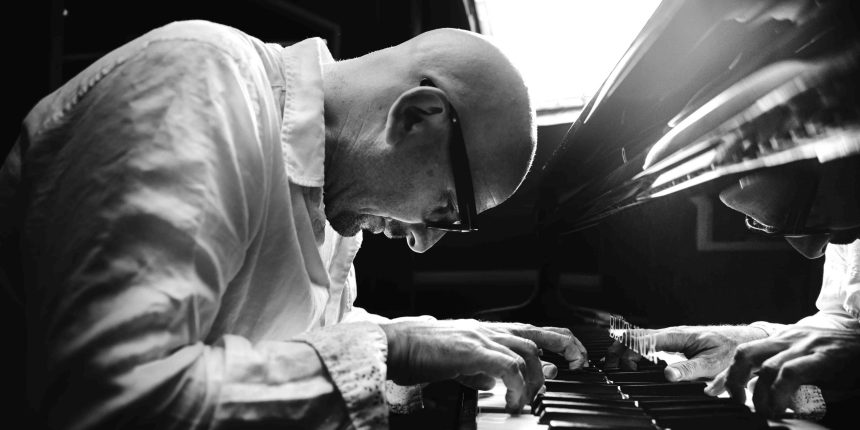
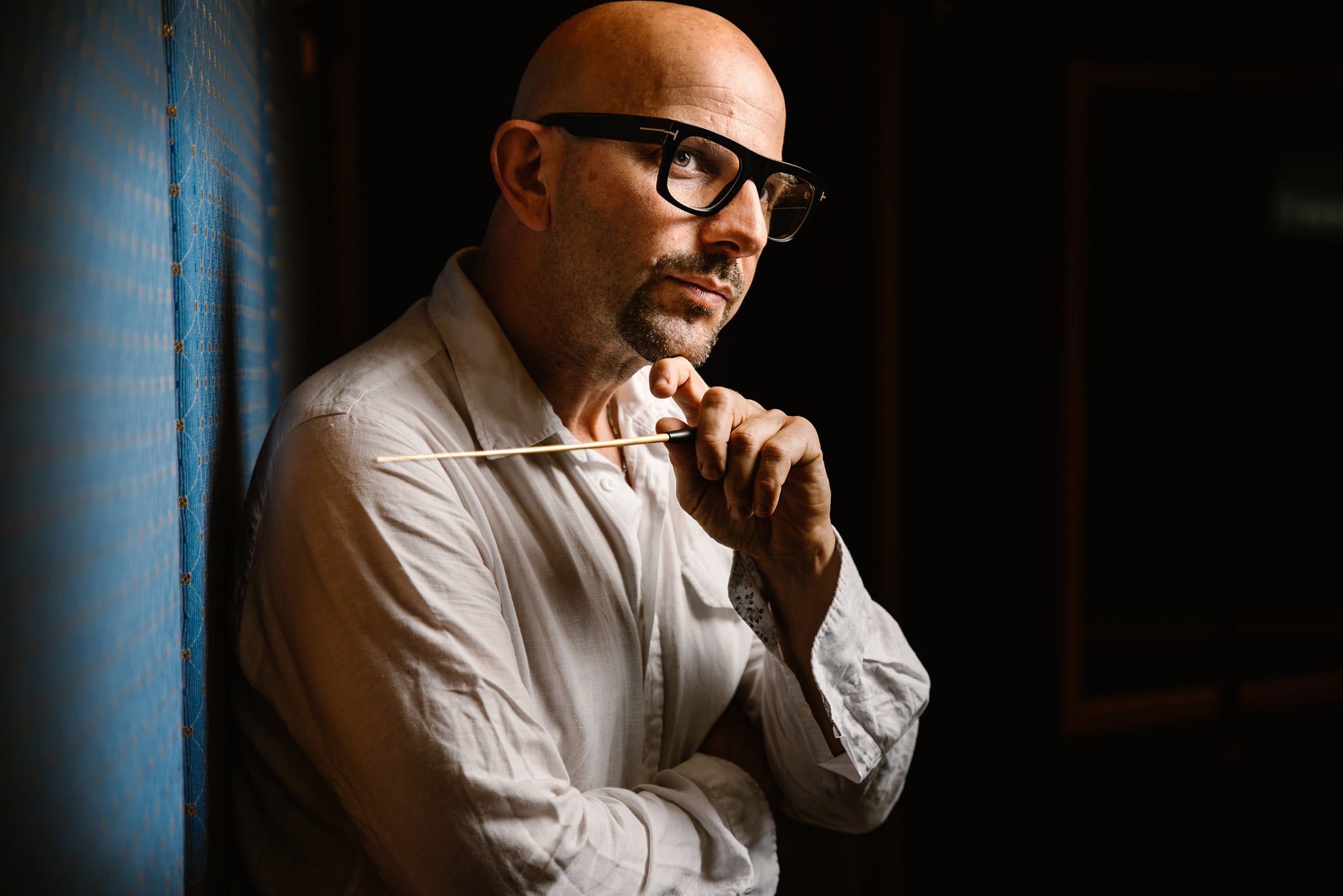
'Like a ray of sunshine' is the title of the first single from Pino Tafuto's new album, due out next winter. We wanted to meet the pianist, composer, producer, conductor who boasts important collaborations with artists of international caliber.
From the direction of'Rai orchestra meeting with Gino Paoli and collaborations with artists such as Nino Buonocore, Tullio De Piscopo, Lina Sastri and many others. We asked the musician Pino Tafuto what are the secrets that led him today to record an album with the prepared piano technique, used for 'Plan B', forthcoming album.
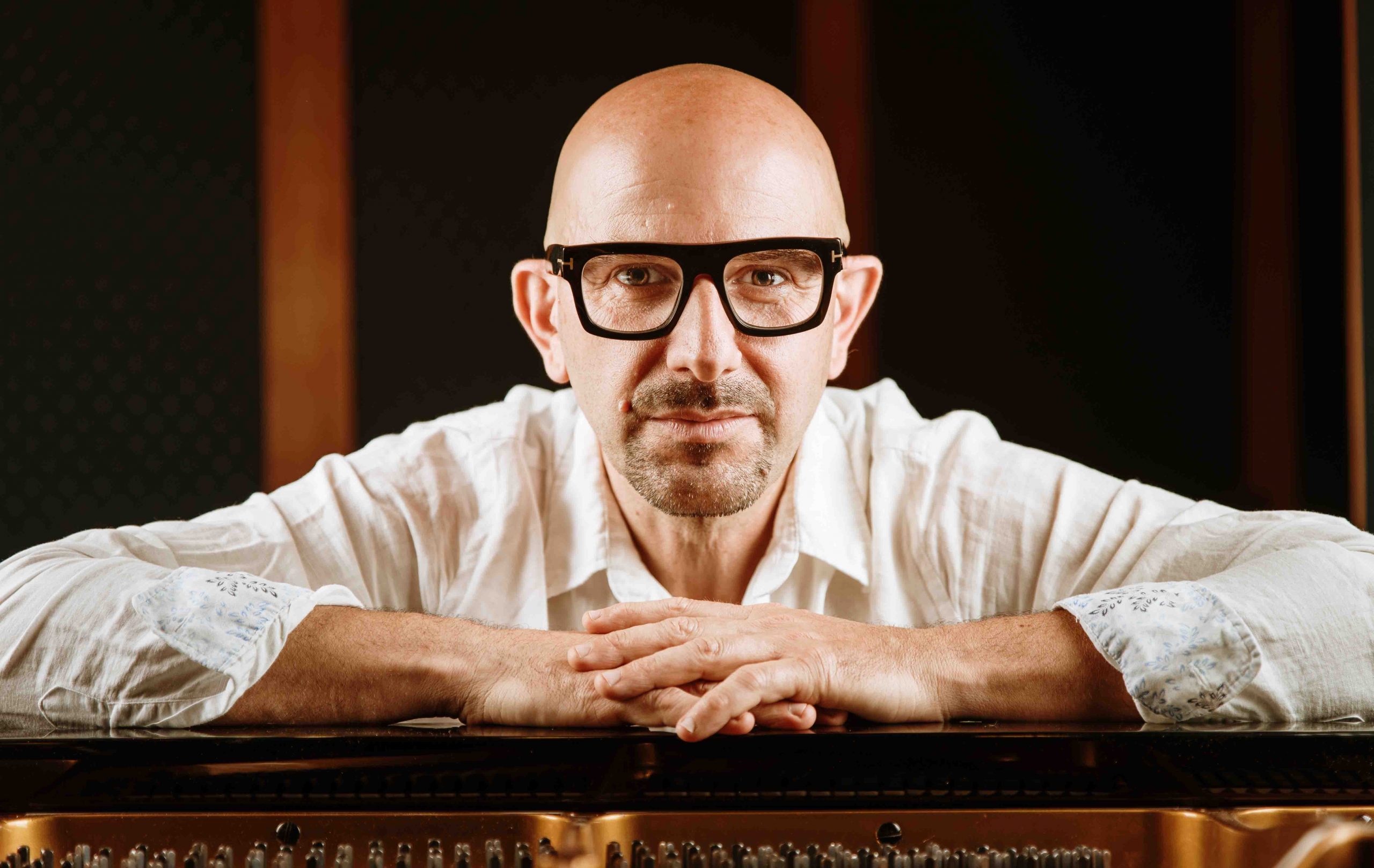
Umberto Bravo: Hi Pino! Before talking about the first single from your Piano B album, can you tell us a little about your career as a musician?
Tafuto pine: Hi Umberto, gladly! Mine is a path as an instrumentalist that I have built experience after experience. The one that marked me in absolute terms and that opened a way for me to work was the one with the light music orchestra of Rai, which took place in the distant '96. Find yourself in an orchestra under the direction of the maestro Gianni Ferrio, famous composer, arranger, orchestrator of Mina and of many television programs, it was a great privilege and, at the same time, an important apprenticeship. I was trying to understand what the secrets of his arrangements were and how they sounded so good. Also consider that the great pianist was in the orchestra Amedeo Tommaso, the musician who wrote the soundtrack of the film The Legend of the Pianist on the Ocean di Ennio Morricone as well as pianist of Chet Baker in the 60s. The acquaintance with Amedeo Tommasi, unfortunately recently passed away, allowed me to learn a lot, from wind writing for big band to the jazz improvisation. More than a job, it was a laboratory where I had the opportunity to experiment and learn many things.
UB: So does the orchestral element have an important value in your career as a musician?
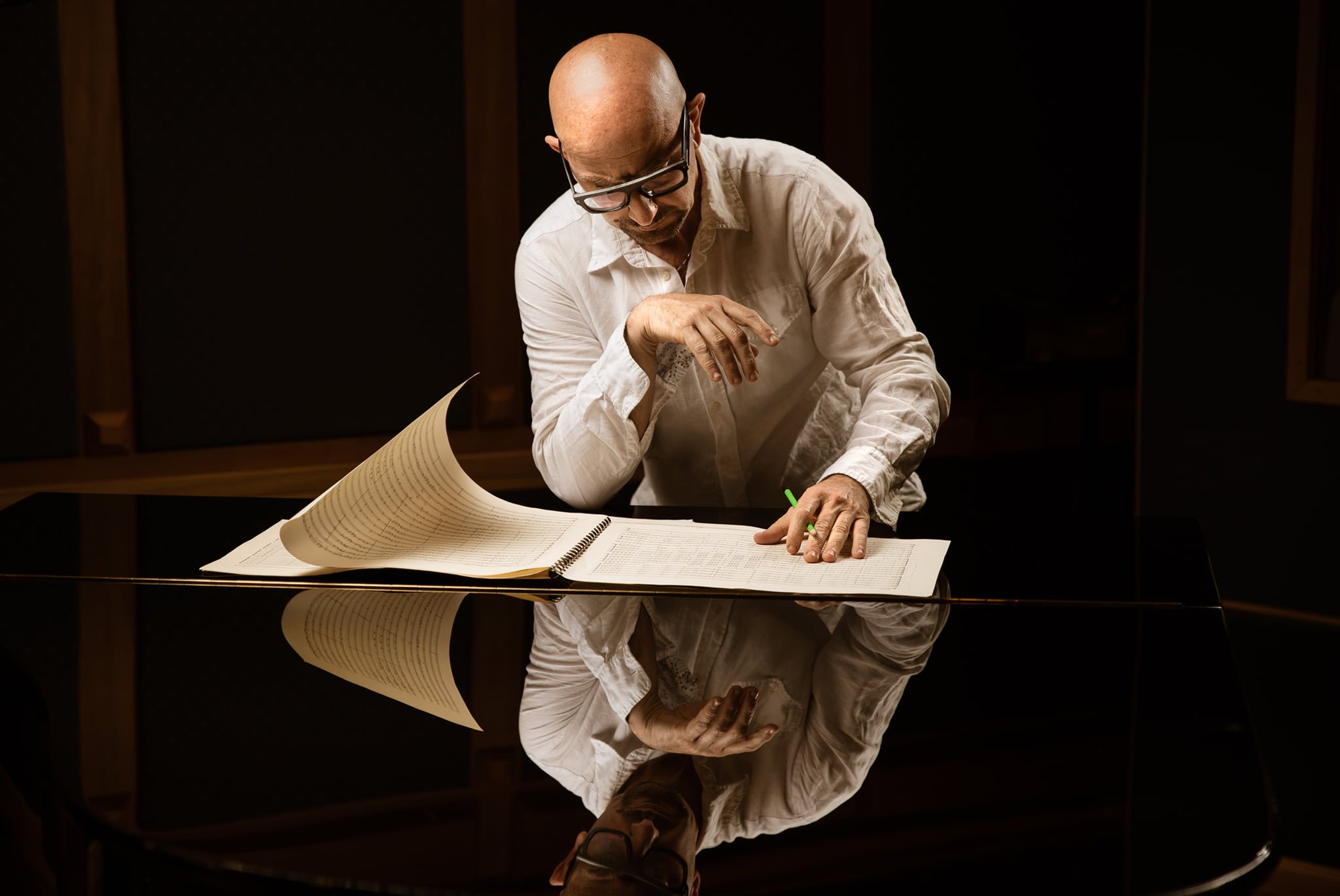
PT: Yes, I've always loved the orchestra. In my opinion it is the most beautiful tool ever. My training is based on classical studies but at one point I was struck by modern music, by the jazz of pianists such as Bill Evans e Lyle mays, who have always been among my reference pianists. From there then I began to do a training course linked to the arrangements, to the writing for film, sound reinforcement, until you get to orchestrate scores. To be clearer with readers, it is good to explain that there are well-defined roles in this particular musical field. There is the figure of the composer who proposes a thematic idea. This is then entrusted to the orchestrator for the arrangement. In that context I have often found myself orchestrating many films, fiction, shows; to get you some headlines, I recently orchestrated Tiptoed, a Rai fiction with music by Marco Zurzolo which had a good success, with Mad-Entertainment I orchestrated and reworked That year he was born ninno from the film-cardboard "The cantata of the shepherds”, Produced by Rai, up to today with arrangements for television programs such as the coming year. From next September I will be busy with Your own business on Rai2, also in this case I will deal with the writing, the arrangements, and the technical part for the sequences and programming.
UB: Very interesting! How did the meeting with Gino Paoli happen?
PT: It happened thanks to my dear friend Adrian Pennino who was its historical pianist and arranger. He proposed me to undertake this mega tour of over 100 dates with Gino Paoli together with Ornella Vanoni with a 25-piece string orchestra. But first there was a first tour in 2001 which represented a sort of break-in.
UB: In this regard, what do you think could be a fundamental factor that made you reach your records? Do you think there is one in particular? Is there a magic formula?
PT: Actually I believe that my path is a sort of puzzle that is made up of many pieces that I have put together through the many experiences, one after the other. But I believe that every experience does not happen by chance. If there is a magic formula, I believe it is to be aware of the professional value that is required for the experience presented to you. If that value is missing then it is very likely that the path can be interrupted. Fortunately for me, in a very conscious way I have always tried to make each experience represent a point of passage towards something higher level, never taking anything for granted and having in mind the focus of the musical project, discarding any distraction that could take me away from achieving a presumably high level musical performance or at least within the reach of expectations. Regardless of the context or the diversity of the medium through which that project would be disseminated, I always put professionalism first, even before the fact that I was working through my greatest passion. I speak in terms of punctuality, respect for roles and, where required, being able to take on others as well, and last but not least, always adopt a communication suitable for the given context.
UB.: As well as with the two sacred monsters of pop music already mentioned, have you collaborated with other relevant artists? Among all, is there anyone in particular that you remember with greater enthusiasm?
PT: It is not possible to make a ranking. As I told you, each experience and collaboration has been formative and exciting at the same time for different reasons. Among others, I had the honor of collaborating with great writers such as Nino Buonocore and Joe Barbieri, and every time it has been a great pleasure for me to take part in their projects. By gravitating in Naples it was almost inevitable to collaborate with other Campania artists, including Sal da Vinci, with whom I had the pleasure of collaborating on the show entitled Symphony in Sal Maggiore with an orchestra of 50 elements, the same orchestra where I used to play as a pianist and then I found myself conducting instead of Maestro Adriano Pennino. I was lucky enough to experience that show from various angles, and this thing in music doesn't happen every day. With Tullio de Piscopo, a great musician and high-caliber drummer. Up to now it has really been a great training ground because I have had the opportunity to have exchanges with musicians with certain needs and who have had to do with great pianists and musicians.
UB: In 2008 your first album comes out, can you tell us how it was born?
PT: It's a very intimate record that contains compositions strongly influenced by my mood at that moment. The melodies are strongly marked by an impromptu authenticity as they are all born in moments of pause during various tours. The peculiarity of this record is precisely the unsolicited experimentation, in the strict sense of the term. Everything stems from melodic ideas that occurred during moments of deep emotion caused mostly by health difficulties. I believe that for a creative, those are the moments in which the artistic sense is heightened the most. In the disc there is also a featuring of my daughter humming a theme, the level of intimate emotion I was in at that time was so high, but the disc still contains themes aimed at a cinema circuit, or ultimately, related to images.
UB: And now we come to the focus of this interview. Your latest job. Plan B. At first listen it seems there has been a turning point. I'm wrong?
PT: You're not wrong at all. Starting from the technique with which I played and recorded it, which all comes from the prepared piano.
UB: We explain to the readers of Age Of Audio who do not know the meaning of what it is?
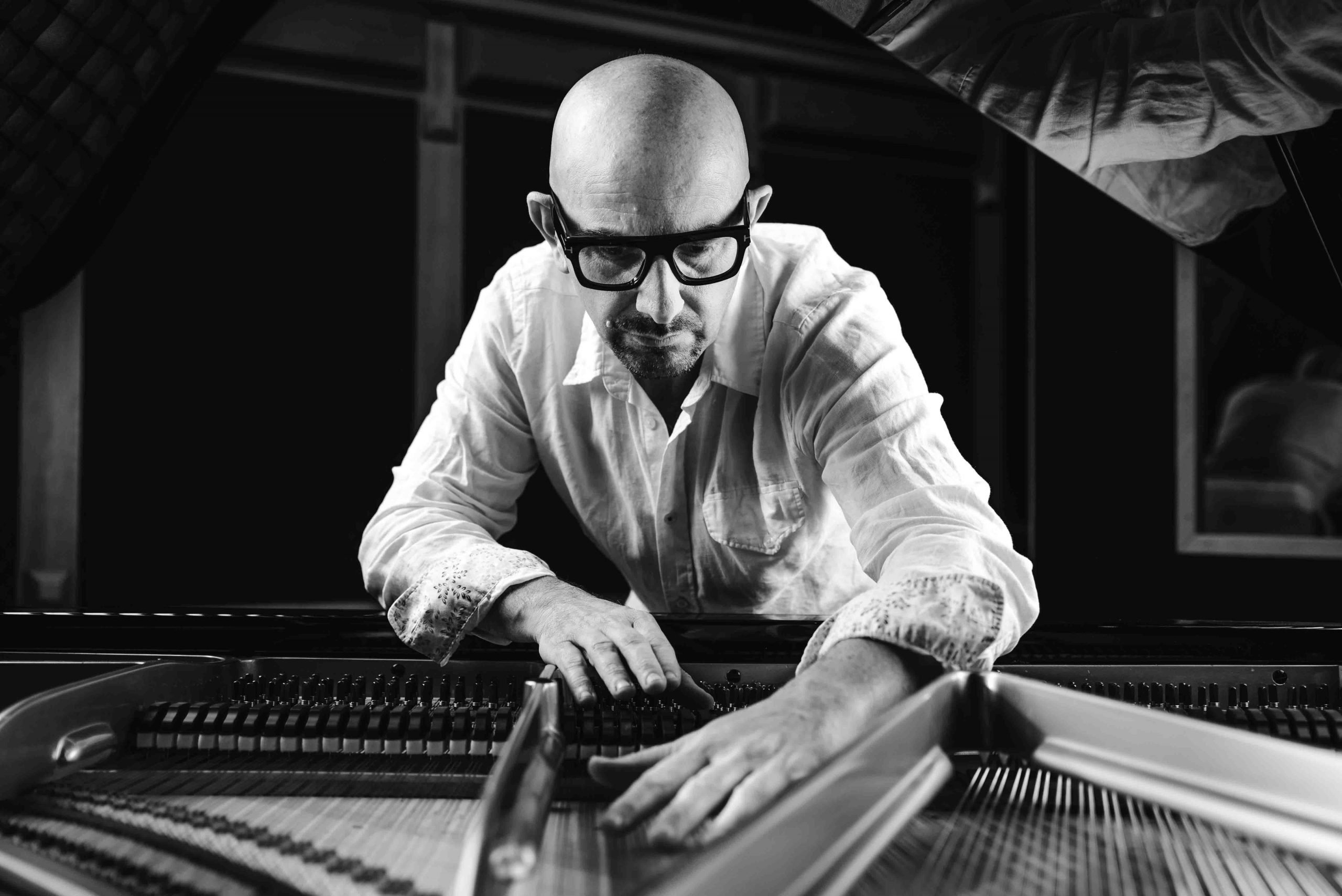
PT.: Sure! A prepared piano is a piano whose sound is obtained through modifications that are made to the strings, inserting objects of various kinds, with the intention of being able to alter the timbre produced with their vibrations. This technique has often been applied to the sound of the guitar as well. For purists it is perceived a bit like a violation of a classical instrument and is not well received, or perhaps I should say… listened to. We do not start with a precise idea of the sound that is obtained but, more than anything else, it is a study on the randomness of the timbre. I have used it throughout the record, and in every track everything you hear, including any sounds that appear to have been produced by a percussion orchestra, are the sonic result of the prepared piano. It is not a technique that I invented: John Cage, Steve Reich, Philip Glass I am among the school leaders who have somehow opened a way for this type of sound. Plan B it is an ambitious project as the piano is used as the main instrument, but at the same time I tried to recreate a sort of timbre bank that covered all the percussive sound part, for example for the sound of hi-hat, snare, bass drum, shaker, crash. For the latter, for example, the solicitation of the strings of the piano to obtain different timbres, I performed it with violin bows, therefore, simulating synthesizers, all processed through delays, envelopes, etc. The sound of the bass drum, on the other hand, was obtained by placing a cushion in the tail of the piano and literally punching it. That thud, almost dull sound, satisfied me. The presumption of doing everything with a single tool makes the result extremely interesting from a creative point of view. The piano I used is a grand piano Yamaha C3.
UB: How many tracks does the album consist of?
PT: It is composed of 13 tracks, strongly inspired by the period of work stalemate to which the pandemic forced us. The title of the album, Piano B, comes from this reflection, indeed, to tell the truth, it has a double meaning. During the pandemic, the figure of the musician, like any other figure in the rest of the world, had to reinvent itself in some way. Plan B, first of all, represents my creative response to that moment, and was dictated by the search for an escape from that forced break. Secondly, the Piano B title also comes from the fact that I used a second piano, which then leads to a third and a fourth, which lead to overdubbed sounds and which give a unique and original result, which has become my way to reinvent myself with what I had available.
UB: 'Like a ray of sunshine' is the first single, already out on streaming platforms. Melodically and sonically very interesting. Special inspirations to tell us?
PT: 'Come un ray of sunshine' is a composition that draws from the world of the Brazilian choro, from which I tried to create a melodic rhythmic game through the strength of its tradition ... an overwhelming rhythmic strength by exploiting the multiple sounds of my piano, I tried to obtain a composition that could have almost the strength of a hymn, a hymn to freedom.
UB: Is there a sponsor you need to say thank you to or did you produce all by yourself?
PT: In spite of myself, I don't have a sponsor. I self-produced the whole operation, both from a creative point of view, from miking to recording, editing and mixing, and from a purely financial point of view. In some tracks there are features of some musician friends like Anthony DeLouise on the double bass playing on 5 songs, and the guitarist Maurizio Fiordiliso playing in two others. Mastering was done by Luca Rustici.
UB: When will the whole album be out? Are there any more singles planned before its release?
PT: The album will be released next winter. Before then, two other songs are expected to be released, which together with the first single trace a bit the guidelines of the whole project. 'Ostinato', a piece of classical matrix albeit seasoned with percussive timbres, and then there will be 'Cinque Note', a song dedicated to my two daughters, Federica e Francesca. The title comes from the fact that from their names I have extrapolated the letters F, A, C, E, D which in the Anglo-Saxon notation are equivalent to our Fa, Mi, Do, A and Re, forcing and forcing myself to play and play only with these 5 notes throughout the song.

UB: When will we hear them live? Do you already have dates?
PT: The first single has just come out and I can't wait to be able to play it live. From September, however, I will be engaged in Rai and I therefore believe that the official presentation of the disc, as regards the live field, will be postponed to next spring. As already mentioned, before then there will be the releases of the other two singles before the release of the album, waiting to be free from other commitments and to be able to present it in the lives. However, I am sure that, as a preview, for this end of summer I will make some detours during reviews or festivals, just to give a live taste of the album's songs.
UB: Where can we listen to your music and follow you online?
PT: I'm up Facebook, Instagram, Youtube, Spotify, but I also have a personal website: pinotafuto.it
UB: In light of your experience, what advice would you give to young Age Of Audio readers looking to pursue a career as a musician?
PT: At the base of everything, you have to believe in your abilities. But believing in oneself is not enough, it must be supported by a lot of training so as to be able to acquire as much knowledge as possible. Knowing the subject of music, in terms of writing, together with the ability to use equipment and software, being prepared from several points of view, are an excellent business card if you want to become a musician that can be placed in several areas. Knowing how to write, interpret and know how to rewrite a theme gives an extra gear. But above all, as regards the quality of the path you want to take, I recommend that you carefully examine every move. It may happen that the most economically attractive proposals end up distracting and misleading. I invite young people to consider these proposals above all from a constructive point of view and not to be attracted by the possibility of quick income.
UB: Thank you very much, Pino, it was great talking with you!
PT: Thanks to you! Until next time!


