


In the recording studio, the most suitable type of microphone is, in most cases, the condenser. The wide bandwidth and sensitivity that distinguish this type of microphone make it the preferred choice for all applications requiring great accuracy, particularly vocal pickup.
I confess that whenever the topic of discussion concerns microphones, I am deeply involved, both rationally and emotionally, with the hope that the new test will yield a technically satisfying and emotionally fulfilling result. Guys, we're talking about microphones here, the first link in the audio chain, the main culprit in determining whether a recording is good or bad—the transducer par excellence! First piece of advice: regardless of personal tastes regarding timbre, when choosing a microphone, make sure the construction and quality of the components are state-of-the-art (budget permitting) to avoid unpleasant disturbances such as background noise, hum, and distortion related to a poor signal-to-noise ratio, low sensitivity, and poor sound pressure level. So, let's proceed to the description and testing of our two microphones.
Audio chain
For this test, the 2 microphones were connected, using a Mogami cable, to a Millennia Media HV 3 preamplifier, as this type of PRE, unlike many of its "colleagues", has a very great linearity which makes it colorless. The outputs were connected directly to the converters of the Tascam MX 24/24 multi-track recorder, with 24 bit / 96Khz resolution. Everything was monitored with Genelec 1031 speakers.
TLM 103, how it looks
The microphone is presented in an elegant wooden box together with its metal joint support to fix it to the rod (Fig.1). The microphone body is rather short cylindrical in shape. The capsule is protected by a double grid almost double the height of the microphone body. The protection grid is fixed to the body with three equidistant screws. The logo appears on the body of the microphone and is strategically placed on the side of the shot. Under the base of the body there is a threaded cylinder to properly screw the microphone to the jointed support supplied or to the elastic suspension which is supplied as an optional accessory. It is a cardioid condenser microphone with a large pressure gradient diaphragm. Requires 48 Volts phantom power.

TLM 103 under press
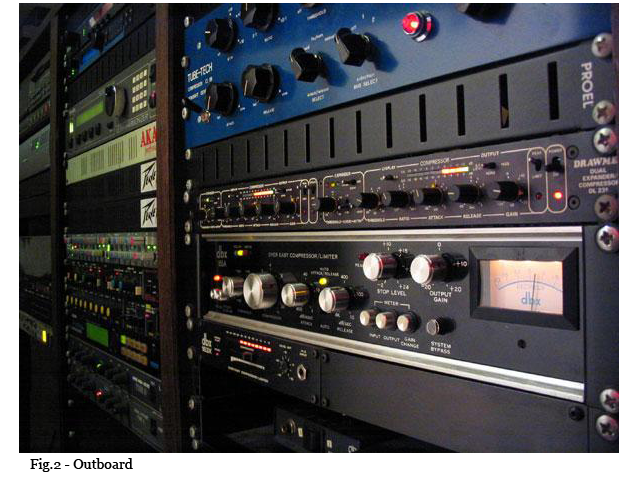
The first thought, after having ascertained that the membrane of the TLM 103 (K87) is the same mounted on the very famous and, in my opinion, very hot U 87, was: "do you want to hear that here we find ourselves having the same performances, with the only difference, among other things acceptable, that on the TLM 103 there is only one polar figure, that is the cardioid one? ". Well, gentlemen, that was not the case: the TLM 103 is another microphone. It ranks among the universal microphones, that is, suitable both for recording vocals and for recording instruments in general (winds, strings, percussion). TLM stands for "Ttransformless microphone "(the usual output transformer is replaced by an electronic circuit) and it is precisely the absence of the transformer that determines the tonal character, truly clear with better management of theSPL (Sound Pressure Level) and also the very low background noise. In this first test we examine the Neumann TLM 103 struggling with a male voice, undoubtedly the most fascinating and changing instrument we can record. Placed at a distance of approx 25 cm, the microphone returns a timbre of great detail and definition both on the low frequencies and on the highs, while less homogeneity is highlighted on the central mids. So we can certainly say that its tonal character makes it very suitable for modern recordings and in line with the listening type of today. Approaching the singer about ten centimeters to the microphone, an increase in energy was immediately noticed due to theproximity effect, but unfortunately it was not able to contain the emission of the consonants, making them a little too explosive, while the band of the central averages has clearly improved, much more intelligible. The upper part of the spectrum, on the other hand, has always remained homogeneous without ever being harsh and annoying. It can be concluded that the microphone performed quite well; however, we must get help from an antipop screen if we prefer to get a little closer to the capsule. As for the female voice, the timbre was a little subtle, in this case it is preferable to look for the proximity effect a little more, obviously with the help of the antipop screen. My advice, for those wishing to give more thickness and harmonic enrichment to their timbre, is to use a characterizing microphone preamp, such as Tubetech, Avalon etc. (Fig 2). Recall that due to the rather minimalist construction philosophy, there are no high pass filters and attenuation pads on the body of the microphone.
Tenor and Soprano sax
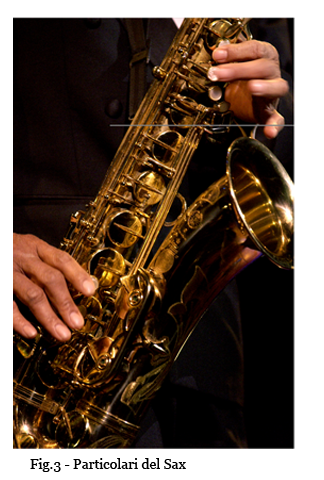
The first consideration is undoubtedly that this type of recovery is quite difficult to achieve. The sax is an instrument with a very fickle tone almost like the human voice. Sensitive to environmental conditions, it always needs pre-heating and its emission has a strong directivity. So I placed the microphone facing the bell at a decent distance (approx 80 cm), in order to be able to contain with homogeneity the natural movements during the execution. Listening to the acoustic sound of our sax in the booth (Fig 3) and comparing it with the recorded one, I immediately noticed a surprising naturalness. There was only a little air around, but this was due to the used cabin, which was not very reflective. However, everything can be solved by adding a good reverb during the mix. For the soprano sax, I positioned the microphone in such a way as to mainly capture the emission coming from the upper part of the instrument, where the mechanics are located. From this area comes a really warm, soft and sweet tone. The sound coming from the bell is definitely rich in medium and high frequencies, perhaps suitable for a context of folk music. I'll tell you an anecdote: while being a sound engineer at a popular ethnic music festival, I happened to have to mic a great variety of instruments, some of them really unknown to me. Finally the turn of a soprano sax came and I behaved in a universally accepted manner, as described above. The musician immediately gave me a face of disappointment because he wanted the microphone directed to the bell. Pleased with the orchestral, I waited with curiosity for the result in the ensemble. I had to change my mind because in that situation and in that genre, that “ciarammelato” sound was absolutely right. Returning to the test, the TLM 103 also in this case returned a good homogeneity over the whole spectrum of this splendid instrument, including the reflected and indirect sound coming from the bell.
Guitar
For this type of test we have tweaked a bit of everything, from classical to folk guitar, including electric, from classic to modern. The microphone once again confirms the premises on its universatility. He managed with dignity the tonal variety and also the generous pressure provided by the electric guitar amplifier. In this case it did not return that clear and sometimes bad attack typical of the dynamic SHURE SM57 (Fig.4), but all that is expected of a good large diaphragm condenser microphone. A warm, large and enveloping sound.

Percussion
We then moved on to percussion. The percussionist did his best with several performances on a long series of skin drums such as bongo, congas, jambe, darbuka, etc. Then comes the turn of metals: tubular bells, cowbells, triangles, etc. The microphone responded with transparency always and in any case. Basically very quiet, he was able to give body to all percussion. By miking the various parts of the drums it shone both on the kick drum and on the snare drum (despite the difficulty of positioning, given the size). Even on the most sonorous hits, no distortion occurred, always maintaining a good definition and an excellent transient response, a peculiar aspect of this microphone.
Pianoforte
In this type of test I would like to be more exhaustive, since we are talking about the king of instruments. It is no coincidence that the piano is considered as such, certainly not only for its considerable and variable dimensions, but also for its extended frequency response, dynamic range and harmonic possibilities. The piano can be considered simultaneously a percussion and a stringed instrument. The modern grand piano has 88 keys and is capable of covering over 7 octaves, whose fundamental response extends from about 30 Hz to beyond 4 KHz; the relative partials bring the upper limit beyond 10 KHz; the dynamic range of this instrument is quite high. About one meter away, a grand piano is capable of generating sound pressure levels ranging from a minimum of approx 40 db for notes played in pianissimo and a maximum of 100 dB in the fortissimi. Let's move on to our test: some time ago I miked a beautiful "Japanese" tail with a length of 200 cm (Fig 5). I tell you right away that, in this type of shooting, the position of the lid is of primary importance, as it allows the sound to be diverted to the right side, which has benefits at a certain distance, but in proximity it can determine the interference between direct components and those reflected by the lid itself. For this test, in fact, I tilted the lid to the maximum and I realized that in particular the grand piano is a sonic instrument of such imposing dimensions and of such complexity as to make a sound recording in the vicinity a really difficult task. At the same time, if we go too far, the room that hosts us also plays a fundamental role. However, we are lucky because it is a medium reverberant room that manages to give this instrument a coherently three-dimensional sound. Let us remember that there is no such thing as sound; it is always in relation to an environment. Armed with a stand, I placed the microphone at a height of approx 120 cm, at a distance of one meter from the source. The TLM 103 reconfirmed its predilection for percussive sounds. Although the general sonority was a little dark, the realism and at the same time the softness with which you listened to the hammers on the strings made for a pleasant and enveloping listening. In the lower area, on the other hand, it returned a robust sound, but always well controlled and controlled: in short, a real piano present in all its nuances.
Conclusion
The microphone proved to be a versatile and work-oriented instrument. Its high quality components are able to return a very balanced audio signal which makes it ideal for any type of user, from that of semi-professional recording studios to professional ones. Basically it's a microphone for everyone. For professional use, a quality audio chain is required, with preamplifiers at the height able to adequately drive the output signal from the microphone. If well interfaced the results will not be long in coming. The value for money is good.

AT 4040, as it presents itself
The microphone comes in an attractive looking cardboard box. Inside reside the box in (faux) leather where the AT4040 is placed next to a cardboard box containing the elastic suspension supplied, made of metal material. We will also find a black anti-dust velvet bag capable of containing both the microphone and the suspension (Fig.6). The microphone body is conical in shape, almost cylindrical, with a grid almost double the height of the body. The protection grid is fixed to it with three equidistant screws. The logo appears on the body of the microphone and is strategically placed on the side of the shot. We find two controls: a high pass selector ad 80 Hz and a -10 dB attenuation pad. It is a large pressure gradient diaphragm cardioid condenser microphone. Requires 48 Volts phantom power.

AT 4040 under press (Voices)
It should be noted that the positioning techniques used for the Neumann were the same also for the Audio-Technique. The general behavior in the presence of the male voice is almost similar to the Neumann TLM 103: same detail and definition, even in this product there is no good management of the proximity effect, so it is advisable to insert the high pass filter in this case. 80 Hz present on the microphone and the pop screen. In our test the female voice available is very conventional, of the clean and subtle series. The microphone was transparent, without giving further coloring. The general tone was slightly chilly. In this case it would be advisable to use a preamplifier inserted in the audio chain, capable of providing harmonic enrichment.
Tenor and Soprano sax

The test of the tenor sax was very positive: unlike the Neumann, the Audio Tecnica AT4040 it provided an extra bit of nastiness, due to the slightly more present mid section, while the low ones were a little less enveloping and defined. In principle the two microphones are balanced. Same sensitivity, silence and dynamic range management, obviously at close range it is preferable to insert the 10 dB attenuation pad on the microphone. For the soprano sax the response was truly brilliant. It provided excellent intelligibility and penetration. The microphone always manages to provide a lively tone, even if the camera has a dry and not very reflective acoustics.
Guitars
In the case of the acoustic guitar, this microphone was very effective, returning the fast attack of the pick on the strings both in arpeggio and rhythmic: incredibly identical to the very famous AKG 414 (Fig.7). It gave back body and a decent attack even to the electric guitar amplifier.
Percussion
On the great variety of percussive instruments available described above, the microphone has always provided a fresh and lively timbre, with an excellent transient response, an excellent attack and body to the whole percussive program, in particular to metals. Even on the drums there was no problem in managing the dynamic range: the timbre of the instrument was rendered with great transparency, without adding any color on the low and high frequencies.
Pianoforte
The reprise of the piano was very truthful, compared to the Neumann a little less enveloping on the lower part of the instrument, but on the other hand the attack of the hammers on the strings is more evident. Maybe we can also prefer it to the Neumann whenever the player or the instrument available give back a too soft sound, when a slightly more ready and lively sound is required.
Conclusions
The microphone stood out in all the tests in a brilliant way with a modern, sparkling, sensitive and versatile general sound. Discreet management of the proximity effect, remarkable quality / price ratio. The ideal user? Home studio, Project studio, Semi-professional and professional studio and live (drums over-head or in front of electric guitar amps). A sore point concerns the operation of fixing the microphone to the elastic suspension (Fig.8) which consists in widening the elastic with the aim of letting the body of the microphone enter until it mates with the circular groove at the base of the grid. Not a small operation, because you always have the feeling that the elastic can give way (don't worry, it won't happen). A word of advice: once the microphone is mounted on the suspension, don't try again.

The final confrontation
It was really a shame not to have had the selected pairs of these microphones available in order to better analyze the stereo image restitution capacity together with the separation of the sources, as these microphones are directional. The substantial difference between these two microphones is quite small. All '80 % similar, the fast response to transients, the management of the dynamic range, the sensitivity, the silence and the quality of the components with all the positive consequences that this entails. The 20 % moreover for the Neumann it concerns the band extremes: the low section is a bit warmer and the high section slightly more “silky”. However, we can certainly say that this difference is clearly compensated by the ratio Q / P of the Audio Tecnica AT4040. Neumann's results have reconfirmed the great experience and tradition, with the serious aim of always providing unique and inimitable tools. However, the results of the Audio Tecnica deserve considerable respect, because behind them there are many corporate efforts to be able to commercialize an instrument capable of combining quality and convenience, without neglecting a sound equal to more famous microphones.
Happy registration everyone!


