

The test we carried out this time saw a comparison between a microphone that made the history of recording, in all its variants, we are talking about the Akg 414 in XLS version, with a close relative sound, the Austrian Audio OC818.
Of the 414, both in version XLS, that TLII, I think that all the knowable has already been explored over the decades, some say that they no longer have the sound of the old series (like B-ULS), there are those who regret the old C414 with the historic capsule inside CK12, the reality is that the 414 (especially in the XLS version in my opinion) remains a microphone”all around“, for any type of application, from the kick of a drum (well yes…) to a wind instrument, a voice….
As we said at the beginning, we compared it with its close relative, i.e. theAustrian Audio OC818, why are we talking about the relationship between the two microphones? Well, the name of the company already suggests various answers, in fact Austrian Audio is nothing more than a new factory born in 2017 after the closure of some AKG factories in Vienna, thanks to an initial team of 22 employees from AKG who gathered the challenge of building something that brought back what was the classic sound of the old Akg models.
Taking into consideration the model OC818 as first of all it has various polar figures such as the historic 414, therefore it is positioned as a useful microphone in various types of applications and its characteristics leave no doubt, in fact it has excellent technical characteristics, starting from a high sensitivity, and is capable of withstanding very high SPLs, up to a low internal noise making it therefore useful in both live and studio situations, as well as broadcast.
The capsule, named CKR12 it is made of ceramic and made entirely by hand, it should be noted that the microphone is designed and made entirely in Austria. Finally, another interesting feature, which leads this microphone to be a novelty in the sector, is the presence of a microprocessor which allow you to remotely adjust the various settings of the polar figures, as well as presenting the possibility of recording two outputs, so as to be able to record two diaphragms separately.
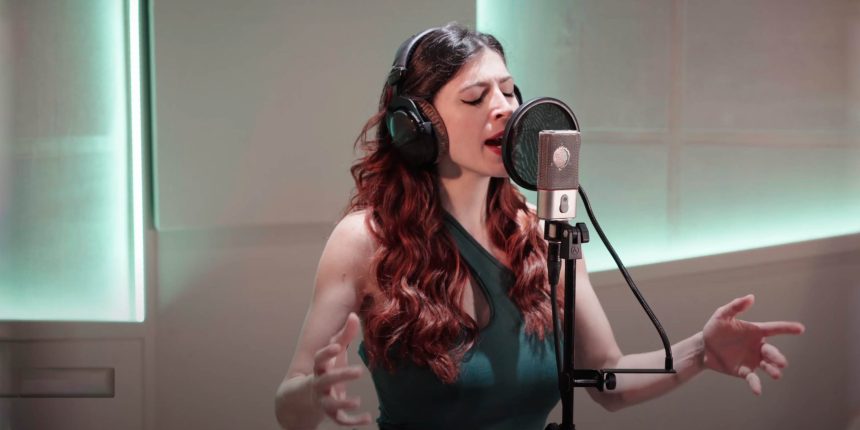
At this point we leave it up to you to draw conclusions about this microphone, listening to the demos we made in the studio with the singer Angelica Parisi.
Tools used for the TEST
- Channel strips: Universal Audio 6176
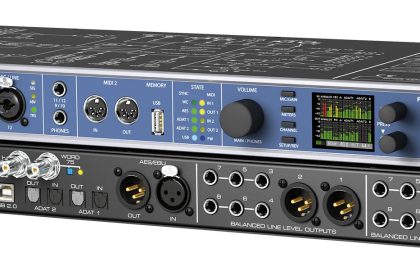
- Audio card: Focusrite Red 8
- Audio cable: Reference Audio
No reverb effects (REV), compressors or limiters were used in the recordings.
High resolution audio files