

In this article we will deal with Universal Audio UAD (Apollo and Satellite) modeling of the Lexicon 480L reverb, but before we get there we will spend two words about the history of the original car.
1986:
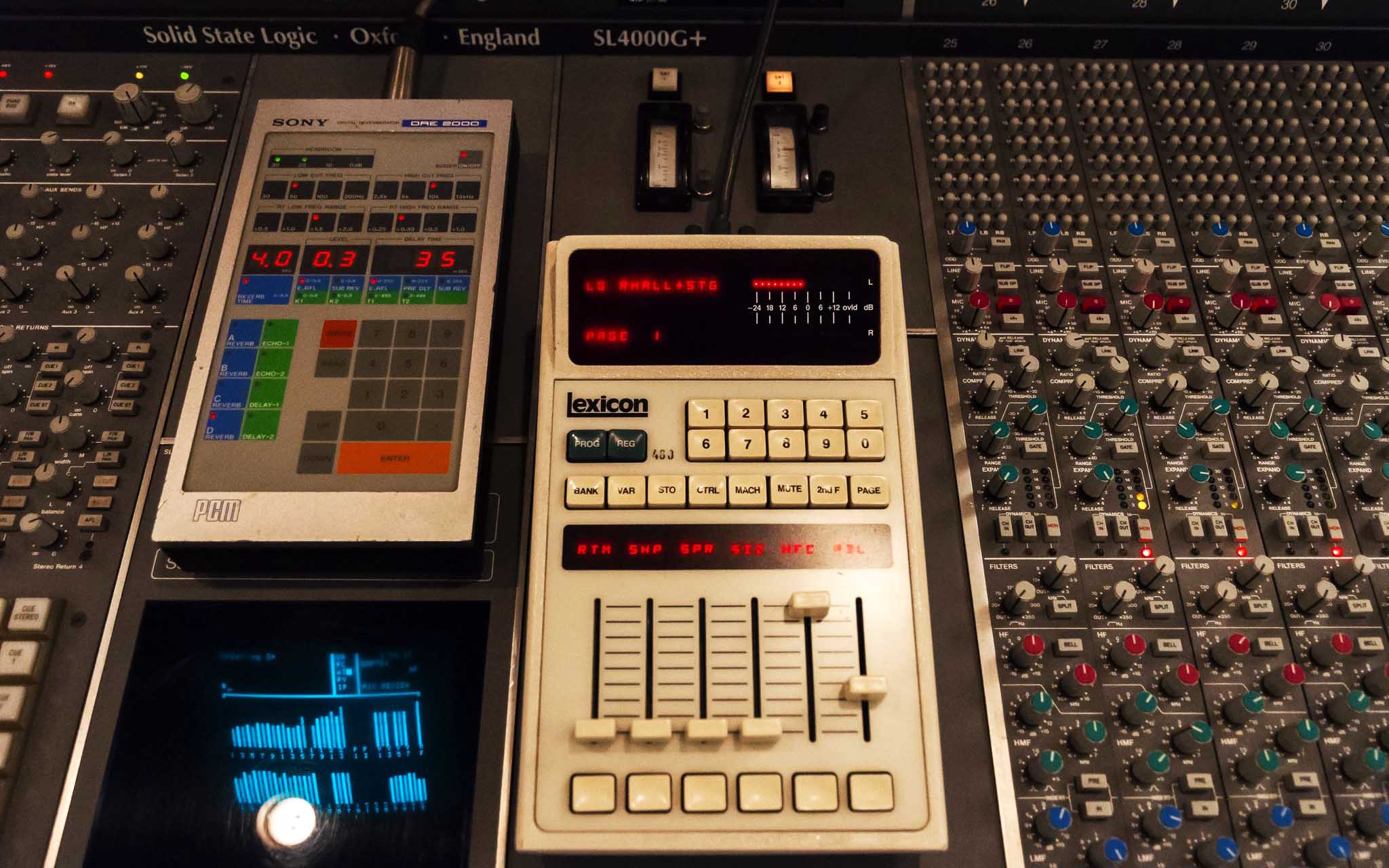
The 480L model is certainly one of the most iconic equipment in the history of modern music; appeared in endless pictures of recording studios of the likes of Ocean Way o Capitol Records o Abbey Road, in the form of its handy white controller LARC extension (Lexicon Aalphanumeric Remote Cuntroll), has become the protagonist of the sound of an era that seems to never end.
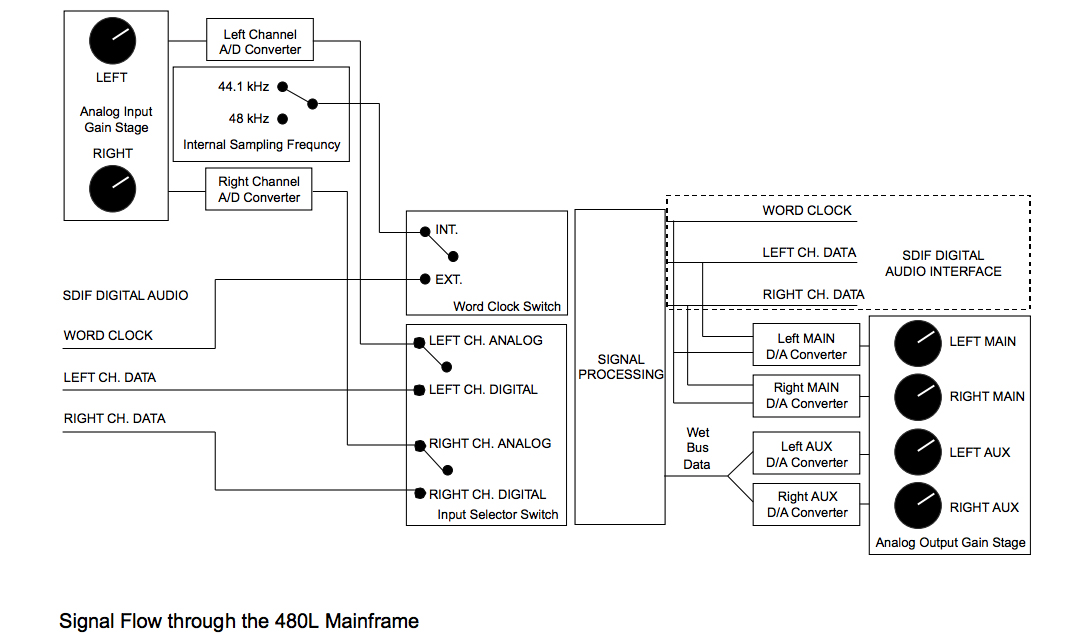
Introduced in 1986, Lexicon 480L (hereafter simply 480) consisted of an update of the previous model Lexicon 224 of which it doubled the computing power with a second additional machine that could be recalled from the A / B buttons in green on the front panel, added new algorithms and improved the quality of the output D / A converter.
The unity hardware that play frames, is contained in one chassis black, of the size of 4 units rack, which used to be relegated away from the fire of the speakers, while the LARC was kept at a reasonable distance from the hands of the technician to allow easy editing of the algorithm parameters.
The 480 had a considerable cost in 1986, around $ 20.000. To get an idea of its quality, which has remained unsurpassed over time, ten years after its release it was still sold for $ 15.000. The prohibitive cost made it an instrument for the professional studio world-class.
Starting from these premises, and adding that in my personal experience I cannot include the intensive use of the 480, for a lucid analysis, I decided to compensate for the lack by calling two veterans of the sector: Massimo Aluzzi e Pepe Innaro, whose interviews will be published in the second part of this article (ready at the time of writing).
The Plugin:
Il Plugin UAD comes in its usual versions: vst 2.4, Audio Units, Rtas e AAX 64 bit and proposes the incarnation of the 480L in its latest version with the firmware final 4.1 (except the bugs of the DCO function).
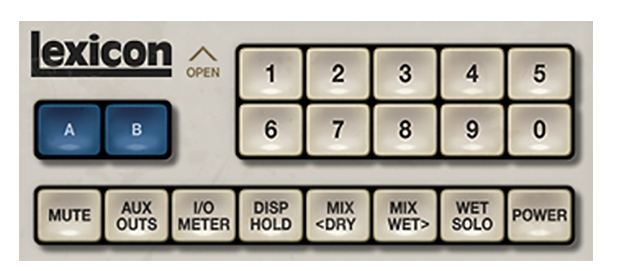
The interface represents the LARC extension simplified, bearing the at the top;

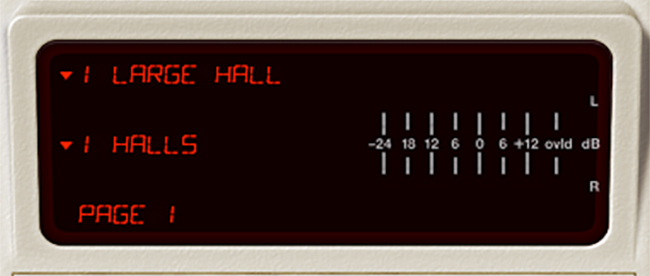
The A / B keys for accessing the 480L's two engines become A / B to store two settings to be compared or recalled on the fly with an automation (note that i control changes for the two machines are different as specified by the UAD manual); the numeric keypad has the double function quick recall of the preset of the selected bank or by pressing the open button on its left, it shows the input and output gains of the plugin; follows a row of eight buttons for mundane functions, the mute button of the inputs, the addressing of the effect on the auxiliary outputs (even here the UAD programmers were so precise that they wanted to model subtle differences between the main and the auxiliary outputs of the machine) the settings of the meter and those of wet dry.
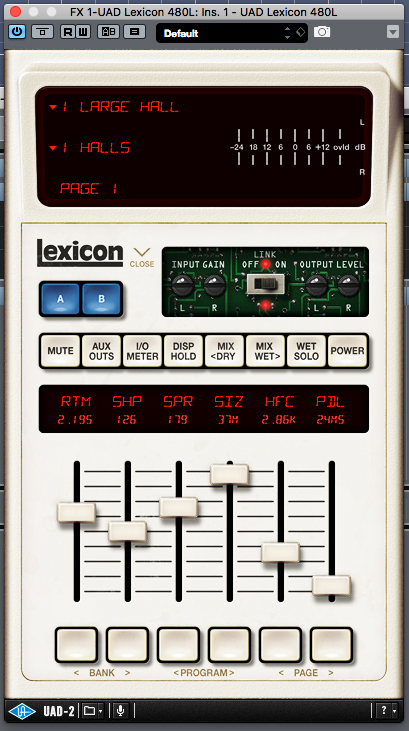
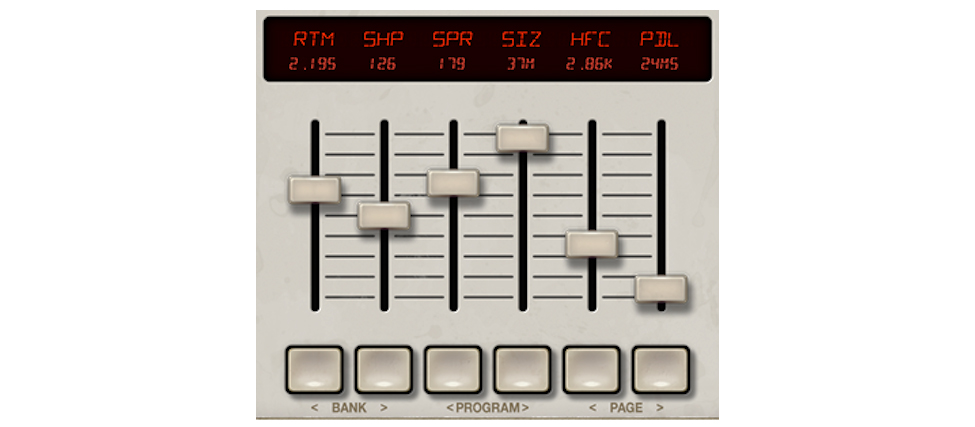
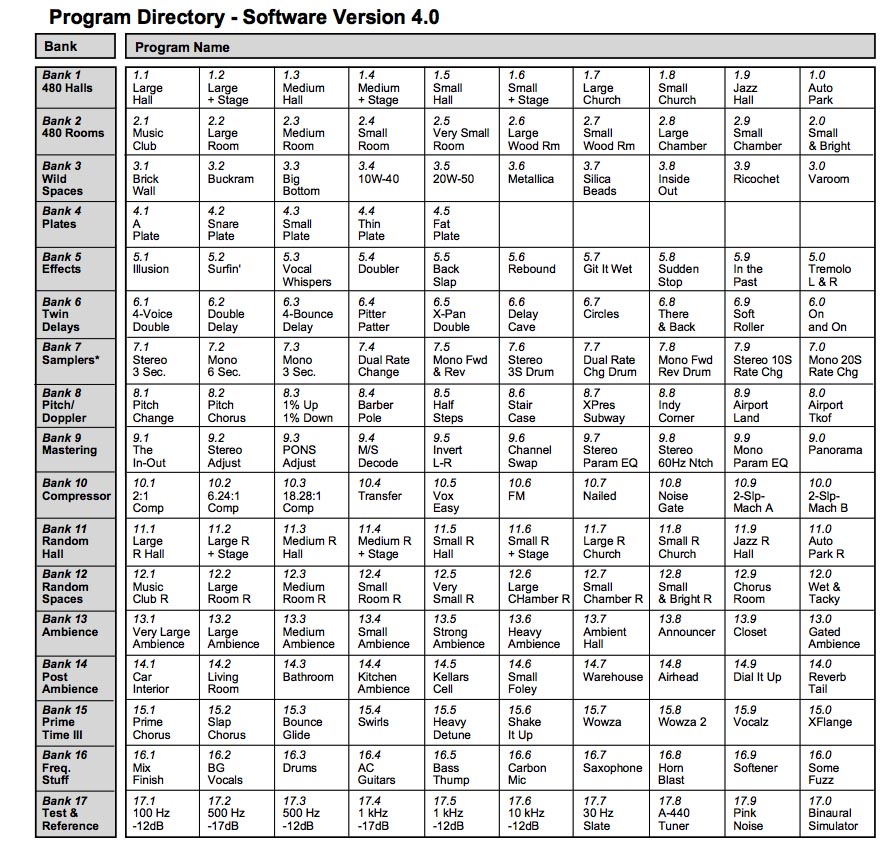
Finally we find the six slider multi function, keys to browse banks and presets and lastly the pages of the slider functions shown by the lower.
In use
The 480L plugin is definitely an important processor, even in the amount of resources it consumes. Mine meter shows me a 61.6 % load for a DSP and a 71.8% load of the PGM per processor. By now we have entered the order of ideas that UAD plugins should be integrated into a system of Plugin host-based that guarantee a certain versatility and lightness of the workflow in order not to delegate all the computing power to the DSP and that the processors open on UAD must be sipped in key points where there is a need for a dynamic analog emulation e credible.
In the interaction and comparison with other reverberation systems plugin based the incredible depth of the processor stands out. Also compared with UAD's famous reverbs such as "Pure Plate”We understand Lexicon how it fits into the history of reverberation and why it is never dated. At first glance “Pure Plate” appears deeper but in the moment in which we have to lower the reverberation in a species a more articulated minimum The Lexicon manages to be sculpted with infinite precision while maintaining its enveloping characteristics.
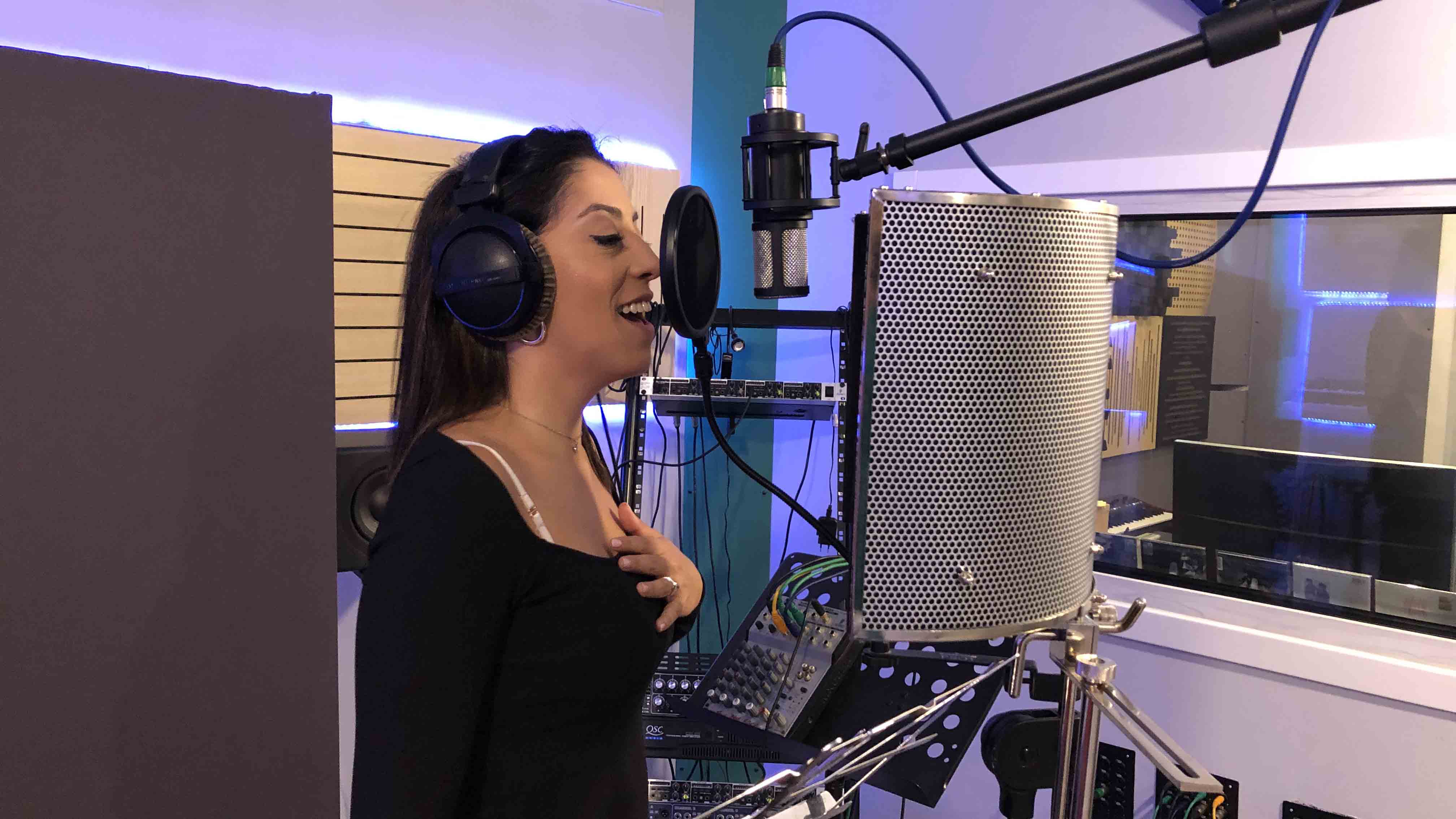
We include various demonstration files in this article that I highly recommend you download (from a soundcloud link that you listened to in streaming it's bad) and listening inside a DAW. The aforementioned files are gods rendering very simple reverberations preset applied on the beautiful voice of "The love handles”Renata De Lucia, whom we thank for her availability. The voice in question is taken from the song "Bob Soul " which you can find on their soundcloud and soon on youtube.
This is keystone of the Plugin; as for thehardware original the reason why from time to time I am choosing it from the lists of available processors: a solid and dense reverberation that does not fear theediting. From a guitar and vocals to a band species acoustic or a thin trap piece, with the 480L it is always possible to define the contour of the portion of space that we want to fill, precise and three-dimensional. Where using a plate or of an chamber is situational and heavily dependent on the arrangement, the Lexicon always finds a way to adapt thanks to the incredible and ingenious reverberation generation structure, having no fear of confronting each other after theediting with the density of processors perhaps less versatile but more characteristic.
I think it's been a long time since this processor was released, at least 5 months, we are now at the dawn of the magnificent Capitol Chambers, which I will review after at least 20 species facts about it. All this time has meant that I could metabolize a editing credible with this processor. Starting from handicap to have used the original in maybe 5 sessions in my life, this splendid Plugin gave me a chance to understand that the Lexicon sound, embodied by this instrument certainly in a very high percentage, it is not a characteristic color of an era but a changeable and multiform instrument, always at the service of technique or creativity. For further information and a comparison with the reverberation of the original processor, I refer you to the second part of this article, where I will report the same audio examples that we can listen to today, processed by the original machine, so that this last piece can justify the enthusiasm that pervades me when I talk about this Plugin.
Tweaking
The real ability to manage this machine lies in the knowledge of the parameters associated with Sliders, which we can browse pressing the last buttons on the bottom right. It is of central importance to familiarize yourself with the parameters defined by the chosen algorithm, we find an in-depth explanation of both the Universal Audio manual and the original 480L manual downloadable from this link.
There is no intuition that it matters, different parameters correspond to different reverberation or effect algorithms that result in a manipulation of the envelope of the spaces generated. It is therefore important, before trying to try to adapt the shape of the reverb to the context in which we are placing it, to understand who forms what and when.
To some it might seem redundant, but I would still like to lend a hand to the curious non-English speakers who read this article by translating part of the manual, even if only for what concerns the parameters of the reverberation algorithms, by doing later a quick, far from exhaustive analysis of Sliders which are the keystone of reverberation manipulation. Obviously I cannot dwell in this translation with unlimited space and if you go to look at the UAD manual you can realize what I am talking about, but I assure you that by reading the description of the reverberation parameters and making them ours, we will make a quantum leap both in our way to listen to the development of reverb over time, both in the way we manage it.
The parameters listed and translated below give a concrete idea of the complexity of the machine. We add to the list notes and notes introduced by the same Universal Audio programmers that clarify the motivation of some choices made during the modeling of the Plugin.
This is the set of parameters that are active when we choose most of the reverberation algorithms. A simple reading of these parameters is fairly unproductive; you have to read them, conceptualize them and master the functions they express while editing the chosen reverb. It is something that I found very informative.
Page parameters 1
1 RTM Reverb Time: The reverberation time defines the duration of the reverberation (in seconds) of the mid frequencies. The second BAS page parameter, i.e. the bass multiplier, is based on this parameter to define the bass multiplier, therefore this value is the actual master control to define the duration of the reverb once stopped. When DCO (decay optimization, page 2 parameter) is set in reverb mode (REVERB 0 - 9), the RTM value changes as the SIZ (size, page 1 parameter) changes, we recommend setting the size value first because the reverb time will vary depending on its setting. Interaction with SIZ stops when DCO is set to effect value (EFX 0-9)
2 SHP Shapes: shape translates as shape, acts in conjunction with SPR (spread diffusion), to define the global environment of the reverberation.
The lower the SHP value, the more the reverb builds up and decays quickly, the more we increase this parameter, the more the attack of the reverb slows down and lasts with the defined value with SPR (spread, spread parameter of page 1).
3 SPR Spreads: propagation, working together with Shape defines the control of the reverb profile. SPR controls the duration of the initial envelope profile of the reverb (shape determines the envelope). Low SPR values correspond to a rapid onset of reverberation at the beginning of the envelope with little or no sustain, higher values develop on both attack and sustain of the reverb. The SPR range varies according to the SIZ value (4 SIZ size, dimension, parameter of page 1).
SPR and SHP control the speed at which the reverb forms and how the reverb lasts and then begins decay, when DCO is set in reverb mode (REVERB 0 - 9) SPR is linked with SIZ and the value of SPR depends on the selected SIZ.
4 SIZSize: dimension. SIZ defines the speed of diffusion onset after the initial period, and acts as a master control for RTM and SPR. For this reason, SIZ can be used to transform a very large reverb into an extremely thin one. Set the SIZ value more or less to the value of the space you intend to recreate. The size (expressed in meters) is approximately the largest measure of the desired environment. It should be noted that changing the SIZ value while a signal is being input puts the effect in momentary bypass.
5 HFC HF cutoff: Low pass filter. Sets the frequency from which a low pass filter with a slope of 6 db per octave starts. The filter cuts both pre-echo and reverb sound. Modulates the low pass filter, to attenuate high frequencies for a more natural sounding reverberation.
6 PDL Pre-delays: The pre-delay sets the amount of time (in milliseconds) that elapses between the event introduced by the unprocessed signal in the processor input and the actual reverberation event.
NOTE: As in the original hardware, the pre-delay times may not match those shown on the display.
Page parameters 2
7 BAS Bass Multiply: The bass multiplier sets the reverberation time of the low frequencies by acting as the multiplier of the RTM parameter (page 1). For example, if the BAS is set to 2.0, and RTM is set to 2 seconds the low frequency reverberation time will last 4 seconds. For emulation of a natural Hall environment, use BAS values below 1.5
8XOV Crossovers: XOV sets the frequency value (hz or Khz) at which the low frequency reverberation turns into the mid frequency reverberation. XOV should be set at least two octaves above the low frequency you want to boost. For example, to boost a signal with BAS at 100Hz XOV should be set to 400 (typical setting for classical music). XOV works best to boost low frequencies when set to around 500hz and around 1.5khz when you want to attenuate them.
9 RTC Reverb Time HF Cut: The high-frequency cut of the reverberation time sets the frequency value above which sounds decay at a progressively faster and faster rate, filtering out reverberation but not pre-echoes. Low RTC values create a tone darker reverberant, simulating the effect of air absorption in a real environment. It also helps in preventing reverberation from engulfing the direct sound.
10 DEF Diffusion: Diffusion, controls the degree to which the initial density of echoes increases over time. High values denote a high initial increase in echo density, low values correspond to a lower density. After the initial period, in which the onset of the echo is controlled by DIF, the density continues to change at the rate determined by SIZ.
11 DCO Decay optimization: Optimization of the decay. it alters program characteristics in response to changing input levels. This contributes to a more natural decay of the reverberation. DCO provides two modes: REVERB and EFFECT. Each mode has a range of 0 to 9.
In the mode EFFECT, values from 0 a 9 have the same natural effect as in REVERB mode, but unlike REVERB mode, in EFFECT SPR mode it is not locked da Thus it is possible to have high SPR values with low SIZ values, which can result in interesting but unnatural solutions.
NOTE OF THE UAD MANUAL: in firmware 4.10 there is a bug in the DCO calculation that causes continuous discharges in the audio. This bug was not present in previous firmware versions. The inclusion of this bug in the UAD 480L emulation was intentionally avoided.
12 MIXES: the mix value, once the WET SOLO key is excluded, sets the output ratio from the processor between the unprocessed and the processed signal.
Page parameters 3
Pre-Echo Levels 1 to 6 or 1,2: (these parameters cannot be automated with external control surfaces or automations). Pre-echo reflection parameters change the perceived location of the reflective surfaces surrounding the source. The pre-echo levels modulate the perceived volume of the corresponding pre-echo delays found on page 4. Depending on the program, there are two or six pre-echoes available.
The concept of pre threw out it can be more easily guessed by visualizing a stage where the first reflections are the sounds emanating from the rear and side walls that arrive after the direct sound of the stage. Usually the reflection of the back wall is stronger e immediate compared to that of the side walls. Pre-echoes are clusters of echoes whose density is defined by DIF.
Page parameters 4
Pre-Echo Delay Time from 1 to 6 or 1,2: (these parameters cannot be automated with external control surfaces or automations) for each of the “Pre-echo level” parameters, there is a corresponding “Pre-echo Delay Time” rider. Depending on the program we find two or six pre-echoes available. Pre-echo Delay Time sets for each of the Pre-echoes. The parameter Pre-echo Delay Time is not affected by PDL (page 2 of the sliders), so the Pre-echoes can be placed before reverberation occurs.
Comparing myself with many of my colleagues who are not necessarily older, but certainly more experienced in handling the original machine, almost all of them confessed to me that the first approach with the Lexicon 480L it was really difficult due to the amount of parameters to manage, which was often done during a session. We are therefore faced with a reverberation engine with a not slow but certainly not intuitive learning curve,
Starting with parameters such as SIZ, RTM, Swedish Patientdatalagen, and DCO any real or abstract environment can be sculpted extremely quickly, provided that the point of arrival is clear.
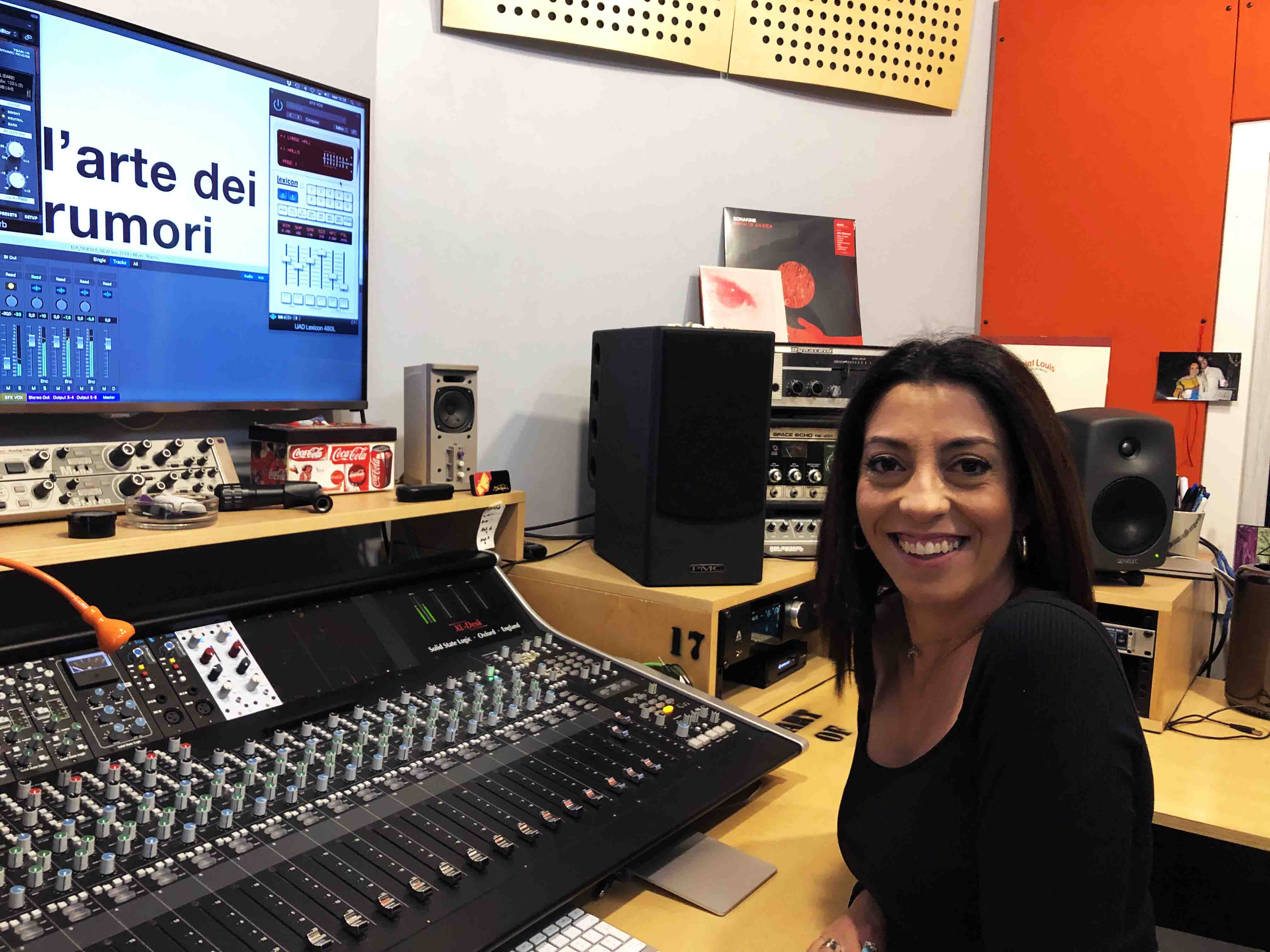
Thanking Silvio Speranza of Studio Noise Art which gave me the opportunity to deepen the subject in its structure and for having made available the voice tracks recorded always at the Art of Noises Studio, I refer you to the second part of the article in which we will further explore the history and interaction with the Lexicon 480L together with the engineers Massimo Aluzzi e Pepe Innaro.
John Rome