

If there is a guitar that, in all its variants and liveries, always makes a name for itself, it is the Fender Stratocaster. Today we propose a comparison between the American Standard, introduced in 1986 and now proposed in the 2012 version with many new interesting features, and the American Special, clearly inspired by seventies (the palettone, from this point of view, is unequivocal) and with excellent Texas Special as standard.

American Special Stratocaster
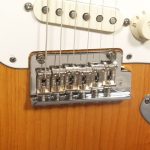
The American Special Stratocaster is one of the cheapest models in the US division, along with the Highway, and compared to the latter, the glossy polyurethane finish immediately catches the eye, which gives the guitar an appearance more similar to that of the Standard, not to mention the greater resistance of this type of finish compared to Highway's thin matte nitro layer. The mechanics, both for the American Standard and for the American Special, are practically identical: they are chromed die-cast, marked Fender and that keep the tuning discreetly, even if it is certainly not possible to cry out a miracle. The bridge, on the other hand, clearly distinguishes the two instruments: on the American Special there is a six-screw bridge, vintage type, with folded saddles and engraved Fender logo; the alloy block, on the other hand, is similar - but not the same - to the painted steel bridge block of the Vintage synchronized tremolo, mounted on vintage American and vintage-inspired Custom Shop models. In fact, both the harnesses and the block are not exactly identical to the original, perhaps betraying a Mexican or otherwise diversified production.


The circuitry is perhaps the real strong point of the guitar: the American Special boasts three Texas Special and a “Greasebucket” type tone circuit which, through a resistance on the control, allows not to lose volume and definition when acting on the tone, keeping the sound always “intelligible”.
The handle has the typical spade introduced in 1966 by CBS, which at the time had recently purchased the "Fender Electric Instrument Co. " transforming it into "Fender Musical instrument Co.", and designed in order to make the logo of the instrument more visible, which always for this purpose will acquire the classic big letters that will accompany it until the beginning of the 80s, an era in which the new management Smith will turn the tables again, with the introduction - in 1986 - of the American Standard, and a few years earlier - in 1982 - of the successful American Vintage series. In addition to the unmistakable headstock, we also find the skunk striped that runs along the entire back of the neck (to allow the truss-rod to be housed) and a "out of tune" detail on the headboard, which vintage enthusiasts cannot miss: in fact, instead of the typical 70s bullett, we find a recess for adjusting the standard type truss rod. Another inconsistency, although decidedly more functional, is the four-screw handle plate, instead of the three-screw and micro-tilt plate used on the 70's sticks, which certainly did not shine for stability.

The fretboard has the typical 9,5-inch “modern” radius and the frets are of the Jumbo type, therefore decidedly tall and big, well adjusted from the factory on the specimens that I was able to try in the shop. Good choice of both maple and rosewood: the woods, in fact, have no obvious defects or imperfections, which indicates a good selection of the boards used.
The choice of colors is poor, also due to cost containment reasons, which includes only black, the three-color sunburst and Candy Apple Red. A real shame not to have foreseen at least an Olympic White, due to the almost spontaneous association of this color with the sight of a palettone, a true Hendrixian paradigm.
Finally, the standard equipment includes the soft padded case and the tremolo lever, in addition to the usual documentation and a cloth for cleaning the instrument: you feel the lack of a hard case, it is undeniable, but for 750 euros on average street price - therefore almost four hundred euros less than the Standard - I would say that this small lack can be postponed.
Fender American Special Stratocaster Data Sheet:
- alder body, modern "C" maple neck profile, 22 jumbo frets, 648mm scale, 43mm nut, chrome hardware, vintage style synchronized tremolo, 3 Texas Special pick ups, 5 position selector, "Greasebucket tone circuit" ”, 70's pallet, deluxe gig bag included.
American Standard Stratocaster 2012
The 2012 American Standard Stratocaster is the latest evolution of the prolific series, whose production began in 1986 under the management of Dan Smith, and which still now defines the "yardstick" for all the production of the Californian house, both towards the high (Deluxe, Custom Shop) and down (Special, Highway, Japan, Mexico).
The new Standard 2012 offers substantial innovations in hardware and electrical equipment: the new Vintage modified bridge ei Custom Shop fat '50 pick up in fact, they are the beating heart of the newborn Fender. Let's analyze them in detail.
As far as the plate is concerned, the vintage modified bridge follows the classic Standard bridge with two pivots, therefore with only two fulcrums in place of the six screws (and therefore as many fulcrums) of the Vintage type bridges, with the advantage, therefore, of a smaller difficulty in setting and greater fluidity when using the lever. The real innovation for a Standard bridge is instead represented by the new bent steel saddles, which faithfully follow those of vintage bridges, which, according to many, contribute to the creation of the crystalline and brilliant sound typical of the Stratocaster, in place of the old "full" saddles alloy.
The pick ups, on the other hand, come directly from the Fender Custom Shop and guarantee an excellent sound paste, giving the American Standard a personality that in its previous incarnations it had never achieved, managing to satisfy both the needs of the modern guitarist and those of the more advanced guitarist. linked to the tradition of the Stratocaster. Even the tone controls of the American Standard boast a small but significant device, that is, in place of traditional potentiometers, no-load type potentiometers have been mounted, which at the end of travel (therefore with the potentiometer on "10") bypass the control of tone, excluding the tone circuit when not used, to the advantage of the high frequencies and the output volume of the pick-ups.

The neck has twenty-two medium Jumbo frets, therefore a decidedly less extreme choice than that adopted on the American Special but just as comfortable. The neck profile is the classic modern C, as well as the radius of the fingerboard always remains at 9,5 inches even for this new version of the Standard. The micro-tilt neck is always present, introduced for the first time in the 70s with the advent of the three-screw plates and still alive on the most modern Fender series, even if in practice very little used by the user. medium. The mechanics are the same die-cast present on the American Special, and on a guitar of this level we might have expected something more, maybe some beautiful self-locking Schaller-Fender like those supplied on the Deluxe.
The color chart available is really impressive, among which the Metallic Jade Pearl, Candy Cola (very similar to Candy Apple Red) and Charcoal Metallic Frost, developed exclusively for this new series.
The standard equipment of the American Standard includes a “bombproof” SKB hard case, cleaning cloth, shoulder strap, cable, tremolo lever and accompanying documentation. Price around 1200 euros.
2012 Fender American Standard Stratocaster Specs:
- new American Standard Stratocaster series with alder body, 3 CS fat 50 single coil pickups, modern "C" maple neck profile, 22 medium jumbo frets, new vintage modified tremolo unit, "no load" tone control, included cable, shoulder strap and new SKB case.
The test
The test was carried out on a Fender Super Reverb Reissue, with no ambient effects inserted and with the controls in flat, to better evaluate the sound of the two instruments without being influenced by the bewitching timbre of this wonderful amplifier.
As soon as the American Special is attacked, the aggressiveness of the Texas Specials immediately catches the eye, powerful and aggressive, which - even at a volume below half -, if you pick, definitely already tend to dirty, with sounds that recall the most gritty SRV. The tone controls keep what they promise, the sound does not lose volume and definition, and even with rather strong adjustments you do not hear that unpleasant "boxed" effect that sometimes excessive use of the tone control gives to single coils. Moving on to an analysis of the individual magnets, I would say that the bridge pick up is a real blade, sharp and incisive without ever being "tight", in solo lines it can easily find its space, with a remarkable attack and presence . The central pick up can be safely used for clean rhythms, even if - on all Stratocasters, in truth - I find it rather anonymous when used alone, while in positions two and four of the selector it becomes the soul of the nasal and compressed sound typical of the bridge / center and center / neck combinations. In this regard, I always recommend trying to adjust the height of the middle pick-up to find your favorite sound balance in the intermediate positions… a turn of the screw can go a long way! The neck magnet, on the other hand, is really huge, with penetrating bass and a lot of three-dimensionality, the real Texas Blues sound is all here, especially with an “amp” like the Super Reverb.
The crunch test is even more exhilarating, both with the Ts9 Ibanez that with the RAT the guitar turns on, and shows all the typical power of overturned magnets. The only flaw that can be found, but only with the RAT (and therefore with substantial crunches) is that the magnet in the neck begins to lose intelligibility, even if the sound is always appreciable. On the crunches the bridge pick-up is the master, Blackmore is at hand (if the hand is at those levels, of course!) And in no case the sound is mosquito or too sharp. Jumbo frets must be liked, bending and hammer on and pull off techniques help a lot, but if you love the "fretless" effect of small frets it is likely that you will not be able to establish the necessary feeling with the instrument. Definitely to try and evaluate in person, in order to then evaluate on the basis of your preferences and needs.
I change guitar and go to test the American Standard 2012. The sound is definitely more vintage, 2012s enough, but with more body, certainly enough to make the American Standard XNUMX a guitar with more personality than its previous incarnations but not a one way, preserving its traditional versatility. On the clean side, this new Standard immediately brings to mind Shadows and to the former Dire Straits, with incredible clarity and definition, crystal clear and slightly lower output than the Texas Special. Perhaps even more than with the American Special it is possible to play with the dynamics of the right hand, the picking really manages to animate the sound of the guitar, which responds in a clear and decisive way, is really fun!
On the crunches, the lower power and the greater opening in the mid-highs make the guitar need some small adjustments on the equalization, especially with the bridge pickup, if you don't want to risk getting a too sharp sound, while the pick up at the neck is really perfect, always defined even with the RAT set at high gain levels. The frets on the American Standard 2012 are medium Jumbo, a compromise solution between the Jumbo and the vintage "narrow" (higher than the traditional vintage, which now few instruments use) and even coming from different keyboards it is easy to find the right feeling immediately, just play it for a few minutes and it will seem like you haven't played anything else in your entire life!
Which do I choose?
And here we are at the thorniest point: which one should I choose? It certainly depends on our needs, in fact it is not just the difference that passes between a Strat from big and aggressive sound, like the Special, and another from vintage and crystal clear sound, like the new Standard, so you will certainly have to indulge your personal tastes and the type of repertoire you play or intend to play, in order not to find yourself disappointed by a choice that may be suitable for your personal taste, but collides with the genre to be played with the chosen instrument. The type of frets is also a relevant discriminant, in fact the Jumbo frets are not loved by everyone, as well as the vintage ones, while the medium Jumbo find wider approval due to the greater ease with which you adapt to them, in addition to the fact that many guitars adopt this type of fret, and in this case the feeling is immediate. The choice of the bridge should also be considered, because if you intend to use the tremolo intensely, certainly the two pivot of the Standard 2012 is the simplest to set and maintains the tuning much better, while the vintage bridge of the Special allows only one use. rather moderate tremolo. Lastly, the substantial price difference of almost four hundred euros should also be considered, also in light of the fact that, in any case, you take home a real Fender made in the USA.
An important tip: always remember to check the body-neck coupling on all bolt-on type guitars, and avoid those with obvious lights (i.e. spaces between body and neck) on the body-neck joint, in fact they could present both problems stability of the coupling itself and poor sustain and "dead notes" on the keyboard.
Now it's your turn, while all I have to do is wish you a good choice!
USEFUL NEWS:
Producer: Fender
Model: American Standard Stratocaster 2012
Website: fender.com
Italian distributor: www.casalebauer.com
Price: € 1.160 including VAT
Producer: Fender
Model: American Special Stratocaster
Website: fender.com
Italian distributor: www.casalebauer.com
Price: € 780 including VAT
See you next review
[soundcloud url=”http://api.soundcloud.com/playlists/2620320″ params=”auto_play=false&show_artwork=true&color=ff7700″ width=”100%” height=”450″ iframe=”true” /]