

From birth, our brain has great potential and the early childhood years are very important for the development of cognitive and emotional areas as they determine behavior and the ability to relate to the surrounding environment. One wonders what role music can play in fostering such abilities. It is known from scientific studies that the areas of the brain responsible for processing music are varied and require numerous daily cognitive operations.

Listening to music from the time one is in the womb (the mother's own voice in that case is reassuring and comforting music), playing a musical instrument, therefore enriches the brain circuits? Many have asked themselves this question and since the answers, received through the comparative study between those who had approached the world of music from an early age and those who did not, were interesting and positive, it was decided to facilitate such a virtuous path, making it heritage common available to children and parents. That's why, as a parent attentive to the training and growth of their child, I turned to a teacher from the association "Music in the cot”Which follows an educational methodology based on musical, motor and expressive learning for children in early childhood and also provides for a triangular child-teacher-parent interaction. This methodology has its roots in the experience of Edwin gordon (1988), continues with in-depth studies by Beth Bolton referred to by the Italian experience activated thanks to Paola Anselmi, founder of the Musica in Culla Project which will later give life to the National Association of which La Fabbrica del Divertimento is part. The activities aimed at children are accompanied by training and refresher courses for operators and educators at national and international level.
Conversation with the teacher of the school's “Musica in Culla” course "The Fun Factory NA" Dr. Antonio Ascione.
AC Can you describe the educational objectives of your course?
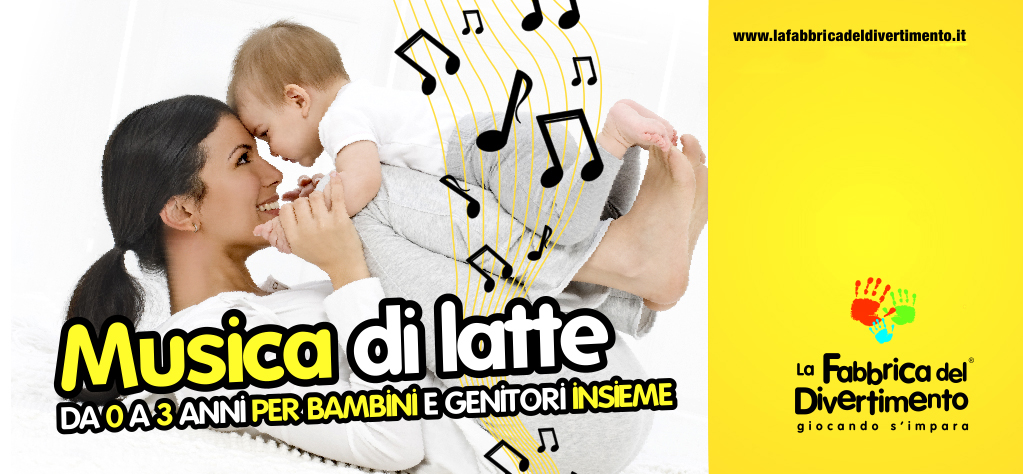
AA In the course of Musica in Culla we use the musical language as an element that can contribute to the cognitive and socio-affective development of the child. No less important is the goal of accompanying the child on a path of autonomy, both musical and emotional, through listening and welcoming. The course aims to develop the musicality of each child by enhancing empathic listening, attention, sound exploration. In our structure, La Fabbrica del Divertimento, which is a member of the International Music in Cradle Association, we give a fundamental space to music, activating paths for different age groups, including Musica di Latte for the 0-3.
AC What is the training path you implement?
AA Musical learning takes place through the physical, emotional and creative involvement of everything that refers to music: play, movement, body, song, sound, silence, listening. Music educators act as role models, as “facilitators” in the process of learning the musical language. During the tour, melodies are offered live in various ways (greater, lower, Doric, misolydium, lydium, Phrygian, locrio, multitone) and several regular and irregular meters. This is to expand the range of musical stimuli that over time the child can assimilate and process with his own personal modalities. Rhythmically rich proposals, with harmonic accompaniments they contribute “so that the child does not only reach the surface of the music, but its syntax”.
AC What is the reference methodology?
AA The reference methodology is Musica in Culla which concerns the musical-motor-expressive learning of infants and preschoolers. The methodology has its roots in some of the basic principles of Music Learning Theory di Edwin gordon and develops around the subsequent insights and researches of Beth Bolton and the contributions of the Italian scientific committee of the International Association "MUSICA IN CULLA" ® thanks above all to the contribution of Paola Anselmi, founder of the project.
AC What is the modular layout of the meetings?
AA In our structure the course is divided into a weekly meeting, lasting about 45 minutes, from mid-September to the end of May.
AC What are the didactic tools used in the course?
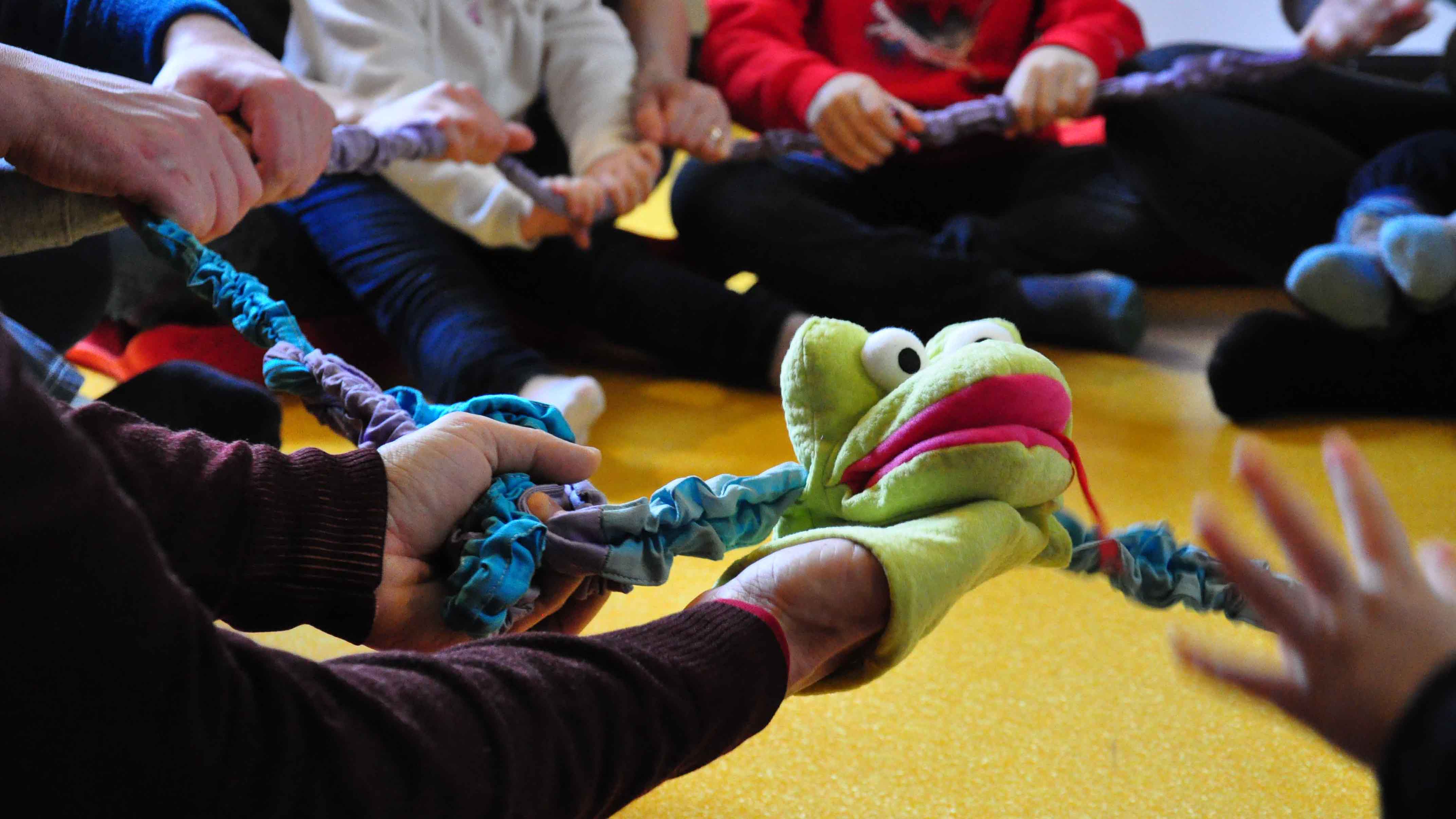
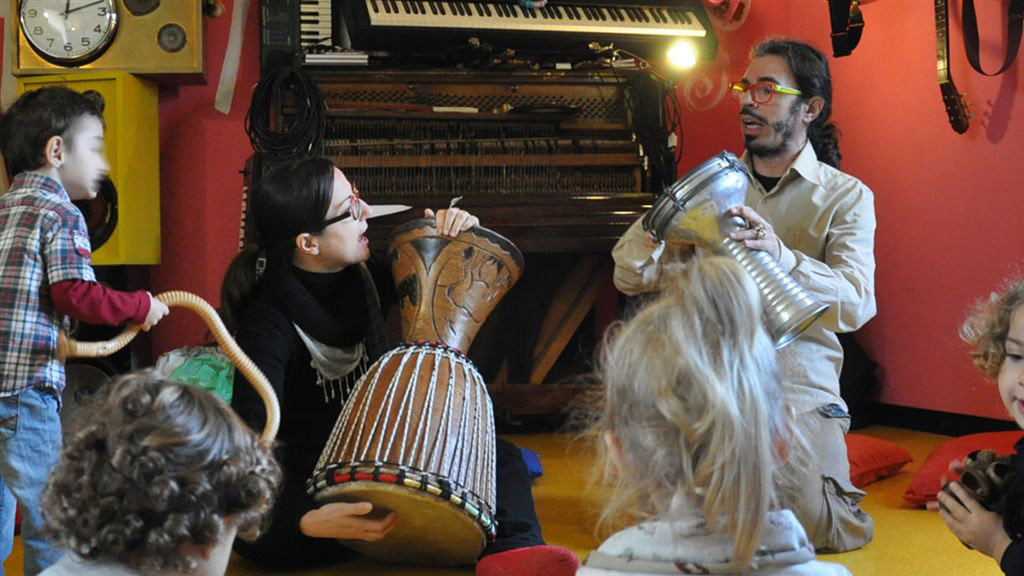
AA Primarily voice and body. Materials such as colored handkerchiefs, pillows, scarf, large sheets, small musical instruments suitable for handling by children.
AC Is particular attention given to children with disabilities?
AA Certainly. The principles of active listening, acceptance, gradualness and flexibility of the musical proposals, centered on the activation of everyone's resources, ensure that integration processes always take place. However, it must be said that since this is an educational methodology and not a path of Music Therapy - with which there are in any case many similar conceptual and applicative premises - it is always advisable to collaborate with appropriate professionals (music therapists, psychologists, child neuropsychiatrists) so that can best evaluate every single situation.
AC Does the musical path you propose aim to be an antechamber of the approach to the instrument or does it have its own didactic autonomy?
AA. The methodology has its own didactic autonomy. The path is not designed as a prerequisite for learning an instrumental study. Certainly in many cases children continue their journey in the fascinating world of music. And certainly such an approach favors the development of purely musical skills. And this development matures, at least as far as we are concerned, in the context of all those methodologies for which music is made and not written, at least not in the first place (eg. orff, Dalcroze etc.)
AC Do you also foresee the use of psychomotor skills in your musical path?
AA Intended as a codified activity as we know it, no. The course does not include the presence of a psychomotor specialist. Surely, however, Musica in Culla bases musical learning precisely on the development of the musical-motor-expressive potential of children. Therefore the body in its entirety is part of this path, music is experienced and learned also and above all through the tactile contact and movement activities as children grow up.
AC How do you involve parents in your teaching activity?
AA Parents play a fundamental part in the journey. As the main figures of reference and care for children, they give safety to the little ones and enhance the stimuli of musical operators. Therefore they sing and do the various musical activities together with the operators, in a process of gradual and spontaneous involvement. If a child sees mum and dad pleasantly involved in the first person, he receives the message that the environment around him and the things that are going to be done are "Ok".
AC What are the professional and human qualifications that are required of your teachers?
AA It is necessary to have completed the Music in the Cradle course in Rome, where it is possible to learn both theoretically and practically the methodology and thus acquire all the necessary skills, also and above all from a pedagogical point of view, in order to interact musically and emotionally with children so small. In addition to the exquisitely technical characteristics, it is very important to be endowed with a strong empathic capacity and knowledge of the evolutionary development of children.
CA How many children do you welcome in your work groups?
AA On average 10/12 children with respective parents.
AC What do you think of the Orff method and the like?
AA The Orff Schulwerk, known in Italy as the “Orff method” but which is actually a pedagogical line more than a method bound by rigid rules, is the basis of our training. Among other things, to be a Musica in Culla operator, one must have attended at least one year of the Orff Course. The principle according to which “Music is 'learned' by concretely translating one's need to live it physically and emotionally, so that it contributes to our formation and global growth as individuals” is the basis of our musical thinking.
USEFUL INFORMATION
Music in the cot
President: Paola Anselmi
www.musicainculla.it
The Fun Factory (member of the Ass.Internaz. Musica in Culla-Music in Crib)
Contact person: Paula Del Giudice
www.lafabbricadeldivertimento.it