



Yamaha is one of the few companies with a strong commitment to the music scene on all fronts.
In fact, the company ranges between the various sectors professional, Hi-Fi / Home Video and "Consumer". Furthermore, in recent years, it has acquired important world brands such as ampeg, Line6, Steinberg e Bosendorfer, further enriching its offer.
Yamaha's Research and Development Division is always, constantly and relentlessly, in industrious activity. Hence, each of his new products arouses expectations and curiosity both among professionals and among music lovers.
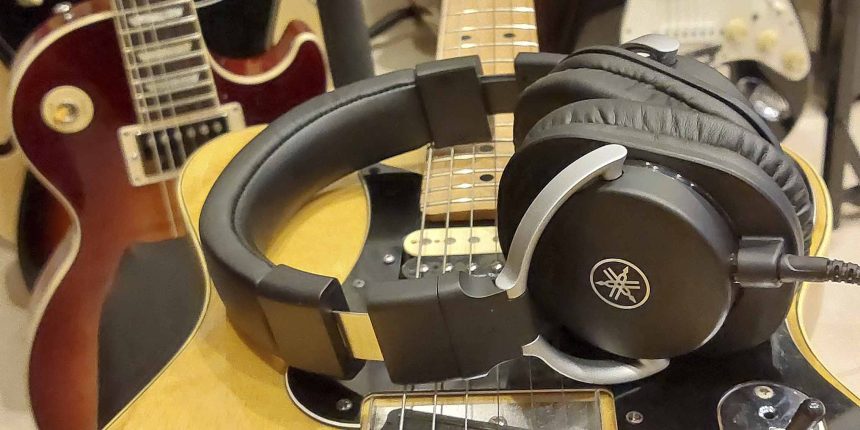
In this specific case, the headphones HPH-MT8 they have been designed keeping in mind the needs of the professional.
Readers of Age of Audio, being experts and / or enthusiasts, they are well aware of the problems faced in electroacoustics when designing “music reproduction machines” (headphones, monitors, PA speakers or other) and the choices that inevitably have to be made.

However, I like to remember that the technical "selections" made during the design phase will then influence and characterize the use and performance of the product itself. In the specific case of headphones, for example, you will have to choose between closed, open, half open, supraural (resting on the outside of the ear) or circumaural (surrounding the ears), the material of the magnets, the size of the driver, etc ...
Therefore, according to the needs of the user (professional, Hi-Fi listener, mobile listener ...) already in the design phase some technical / constructive solutions will be preferred.
Headphones HPH-MT8
Le HPH-MT8, they are headphones circumauarli closed, for a necessary sound insulation of the musician. They have a custom Driver from 45 mm with CCAW voice coil and neodymium magnet. There declared frequency response ranges from 15 Hz a 28kHz. The ear cushions are soft and snug, resulting in pleasant comfort and good insulation - necessary for studio recording and live monitoring. From the designers' statement, the various parts of the MT8 headphones have been made trying to completely eliminate extraneous resonances.
Included are two connection cables (spiral and linear) and a carrying case.

We wear headphones
Wearing the MT-8 was quite "comfortable", despite some initial fears of mine (happily refuted) arising from observing their standard, solid and professional appearance. The headphones adhere well to the ears and head, with a regular distribution of forces, without excessive pressure in specific points. The cushions wrap well the auricles, incorporating them. It should also be remembered that the bearings, with their height, width, depth, construction geometry and material used, also contribute to the reproduction of sound.
Obviously, the perceived "comfort" is the result of the interaction between the MT-8 and one's own anatomical structure - head / face / ears -, and is therefore subject to a certain individual variability. In my case, the perceived sensation was very good and certainly better than expected, given the category to which it belongs.

Ps I wear glasses and I can hardly manage without them. Well, the Yamahas coexisted well with my lenses, without adding particular annoyances or presenting alterations in operation.
Listening and use test
As readers now know, when it comes to electro-dynamic equipment, that is, which have moving structures, these, before the listening tests, are subjected to a running-in period by me and the MT-8s have not been spared. I connected the Yamahas alternately to various sources such as: Beheringer headphone amp, RME Fireface 400 headphone output, Yamaha Mixer headphone output, Smartphone, PC ... The impedance of 37 ohm and good efficiency, allow these headphones to play easily with different equipment.
Medium range
The first sensation felt was that of a "monitor type" listening, that is the music was carried forward, bright and clear, with very precise instruments in timbre and role, probably thanks to careful mid range and not only.
Low range
I bassi they are “almost true”, I write this because, as you know, the listener's body also contributes to the perception of the bass, which will be involved by the movement of the air and by the various environmental resonances / reflections. Well, the basses reproduced by the Yamaha are there, they don't physically give you the “punch in the stomach ”, because they cannot act externally, but they are there, rightly sized and respectful of timbre and length. I think that no one claims to be able to effectively adjust (volume, body, extension, equalization, ...) "the bass" (sound of a single instrument or musical ensemble) exclusively through headphones; however, obtaining valid indications, as in the case of the MT8, that is desirable.
High range
- highest standards, well present and extended, participate in the completion of the spectrum. Initially, in some situations, I found the treble slightly "intrusive", later, with the end of the running-in and frequent use, this feeling has become more and more "normalized", even if with some songs, perhaps also the fault of the recordings themselves , every now and then peeps.
The scene and the air around the instruments are well reproduced and go far beyond the limits of a closed headphone. The perceived response speed is also very good and this allows for fast, clear and precise attacks. Respect for timbre and reproductive clarity allow you to work on the sound in a sufficiently accurate way, without the danger of having to retouch everything, more or less heavily, when you then switch to listening through the monitors (those who use headphones understand well what I'm writing about).
Tests in the home studio
With the MT-8, I can claim to have rediscovered the pleasure of working with headphones, re-appropriating - musically - the most disparate hours of the day (not causing disturbance and not suffering from them), eliminating, when critical, environmental influences and exploiting the other advantages of this type of listening, obviously flanking / alternating, as needed, listening through the speakers. In the end, I really think the return of these Yamaha HPH-MT8s it will be difficult. The more I use them, the more I am convinced that they will contribute to enrich my range of headphones.

Small curiosity, always because we try not to leave anything pending.
I tried to alternate the cables supplied, if two cables are supplied, for completeness and correctness of the test, both must be tried. Well, replacing the spiral one with the linear one, I felt the slight sensation of change, similar to when "dims the light" or, let me explain, imagine you are in a room illuminated by the light of a chandelier with 10 bulbs and suddenly one of them goes out. Sure, you will continue to see very well, but you will have that feeling that something is missing. Well, this is the feeling I felt, translated to listening.
Not happy, and always so that nothing is too empirical, I measured the Resistance values e Capacity of the two cables.
Spiral cable R = 0,8 ohm C 0,222nF
Linear cable R = 2,2 ohm C 0,3 nF
Maybe because of this, maybe because the structure of the cables is different (copper, number and size of the wires ... - it is a hypothesis of course, I have not cut the cables), it will be due to the different length… it will (most likely) be for all these factors at the same time, but I prefer the "sound" of the coiled cable.
YAMAHA HPH-MT8 Technical features

Thanks Cav. Music House Quinto Fabio (SA), for giving me the opportunity to use the HPH-MT8 headphones, for all the time necessary to carry out the TEST.
Useful Information
Producer: Yamaha
Distributor: Yamaha
Model: HPH-MT8
Retail price: About 190 euros including VAT


