


Welcome back to Age of Audio for the second part of this journey into the uses and customs of the Lexicon 480L undertaken using as an excuse the review of the beautiful plugin of the same name modeled by UAD.
Our journey begins again from the auditorium of the State Conservatory of Music “D. Cimarosa ”in Avellino where we will explore these issues with Massimo Aluzzi.
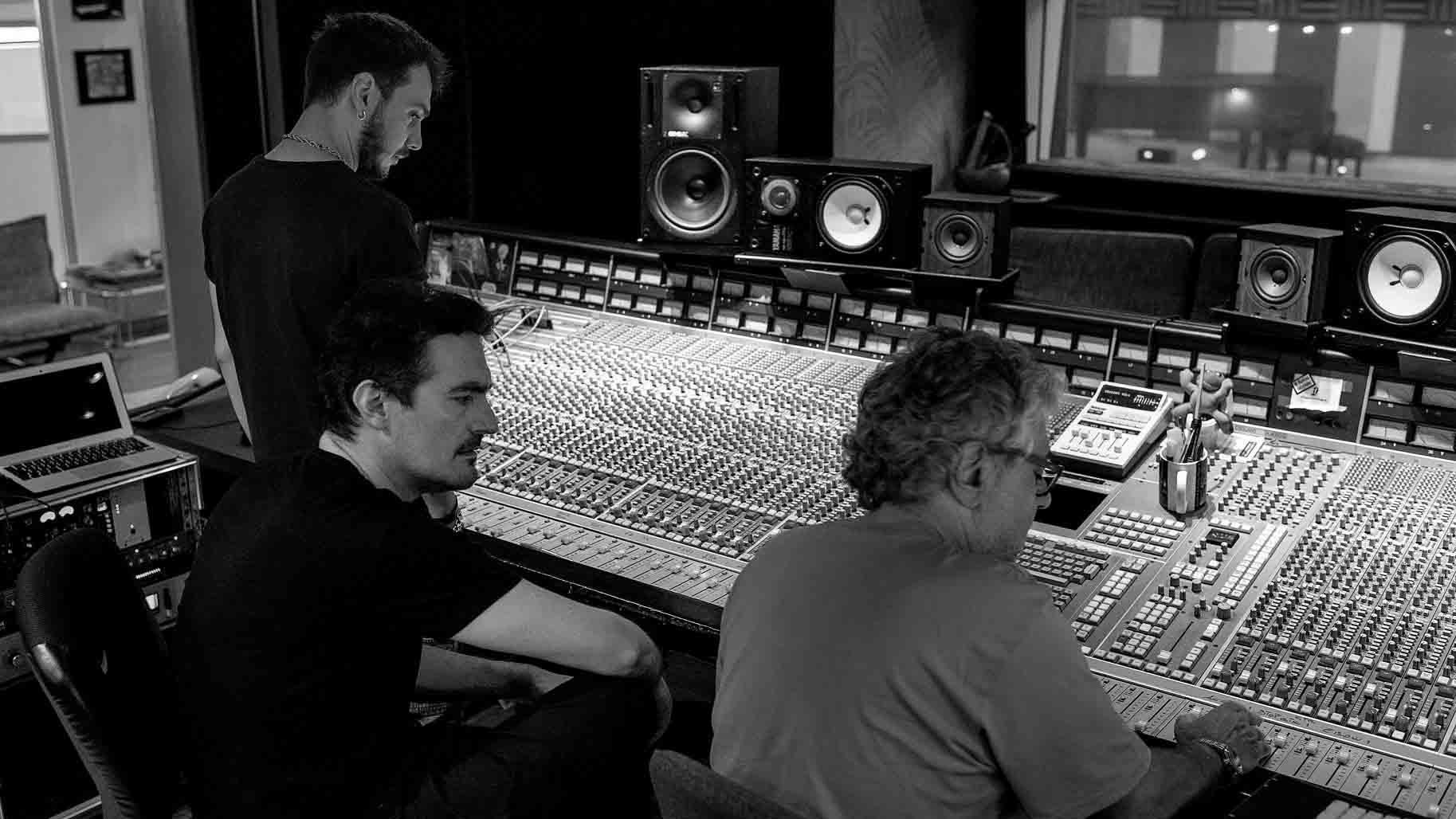
Massimo certainly does not need my presentation but for those who do not know him, I am attaching a link of discogs with a partial discography of his.
Giovanni Roma: You started this work in the late seventies when Lexicon 224 was the master...
Massimo Aluzzi: I like to remember that period with your frenetic artistic activity. Almost all the studios worked 24 hours a day. They worked a lot and everyone they were very well equipped. All, starting with Phonotype, perhaps the oldest study in Europe or the Zeus e Studio 7. At that time I was working in a small studio, that of Claudio Riboulet.
The first reverb I had was the Lexicon 300, the younger brother of all the others, but it was still a very high profile machine. The average quality of the equipment was always quite high in professional recording.
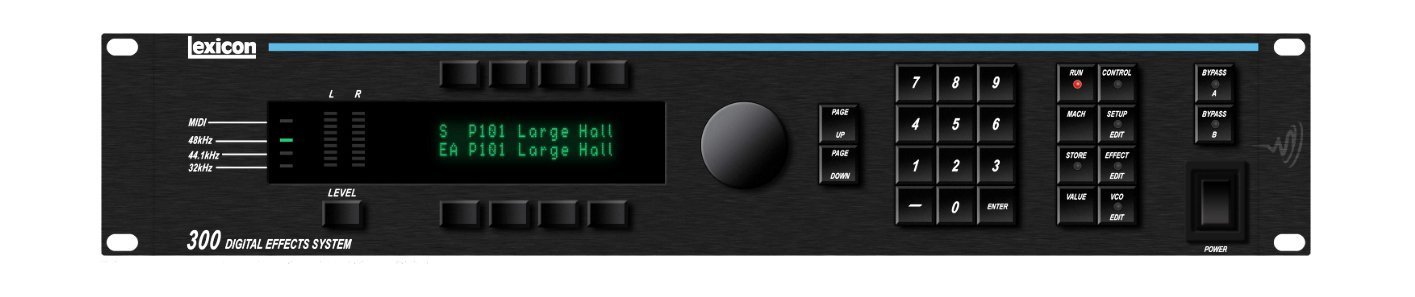
From the end of the 70s there was the advent of 224 become a “particular” reverb compared to machines like the 300 or as the AMS RMX16 or l 'EMT gold leaf or the famous stove EMT 250. Given the noticeably clearer sound paste, it was the first step into digital sound.
A fascinating sound that did not exist anywhere else except in the RMX16, but it was not very versatile.
There was little you could do editing and only on the machine panel. The RMX16 had a particularly "still" sound, especially not very elaborate.
The advent of the 224 he brought with him the LARC extension, a small object that you could keep in the center of the crates.
You must not forget that in that historical period, when the digital-analog hybrid came into play, the right attitude to work in the center of the speakers was lost. The sound engineer was turned towards monitor of the computer because it was starting to do editing exasperated and was no longer facing the center of the sound.
The big studios invented gimmicks to place the monitor of the computer in the center of the counter. Even the company SSL tried to mount in the center of the mix a video relaunch to have the Daw directly into the fire of the speakers.
When 224 arrived you had no more difficulty having to get up and go towards the outboard, do theedit then return to the listening point and go back to editing. You had the LARC, you pulled it to the center and edited, it was perfect and had tons of remote processing capabilities.
GR: I've always noticed the interactivity that the 224 offers you compared to an RMX16 which I believe was yours competitors.
MA: Yes, as I told you the competition was extremely limited inediting and in the response. When you raised the high frequencies with a click of a point maybe it was excessive. There was no real fine control. The 224 also introduced innovative parameters such as stopping the reverb after a certain time, a gated reverb simulated. He had gods preset di room, Hall e plate that were really different from each other. There was finally a totally different timbre paste between algorithms of the same machine.
GR: And then came the Lexicon 480L ...
MA: In my opinion the 480L was a natural technological evolution for that historical period.
Technological evolution was always focused on achieving maximum quality without compromise.
When the 480L arrived we saw a machine that was a bargain for the entrepreneur: simply double the processing of a 224 in a single container but at a cost that was not double.

For the sound engineer it continued to be a business because he remained in the center of the listening fire but with two machines completely editable. And last but not least, the technological innovation introduced with the quality of the new D / A converter also gave a distinctive tone to this second product. A car with which the Lexicon reached the pinnacle of its history from leader for quality, ergonomics and even price.
GR: You find yourself in the statement made by Lexcon sound reside predominantly in the random halls?
MA: In part, if you add the rooms yes, in the halls and in rooms.
But I believe that a fundamental part of the Lexcon sound also resides in reverse roll (more for 224 than for 480).
GR: Do you think that working with this type of room tone is useful for retracing the sounds of an era or is it still versatile and current?
MA: This is a complex concept to transfer correctly. I would immediately reply that, if used with a certain attitude, it is a bit like retracing an era. But I can also tell you something else that brings the discussion back into focus.
Here in the Conservatory I have to deal with many guys who we can say "pure" from the point of view of the approach to the reproduced music. We live in a digital age so most of the interaction, at least in certain contexts, you do it through native digital processors, plugins etc.
When at some point in the listening you insert for example a PCM92 all the boys instinctively say that the latter is more beautiful. Without going into the merits of style orediting. Only Hall vs Hall, open and open.
Il PMC92 for me it represents the return of Lexicon after a long period of darkness in quality speech.

There must be in our culture or our heritage a truth in the quality of the timbre hidden somewhere instinctively. A large number of people choose that.
You realize that the control you have with these types of machines is like moving one step forward and actually finding yourself in that position. While with native processors, sometimes, you don't get this feeling.
With dedicated processors, the human-machine relationship is always direct. An action corresponds to a reaction.
Here we are faced with a more instinctive and primordial reaction, animal if we want: we record a piano and choose an environment by instinct.
GR: When looking for a 480L what am I missing? What am I looking for?
MA: First I look for the so-called sonic paste, the return density of the reverb.
As a second point, I look for a car with a chance of editing of the parameters and certainty of their reactivity: Pre-delay, room width and reverberation time. Editability of the passband, cut off, bass multiply and ultimately spins, spreads etc.
GR: Let's get out of the Lexicon history theme for a while to go on a relevant discourse anyway. We live in an era in which the work experience manages to go beyond the walls of the studios and spread through the digital television channels that offer tutorials held by professionals of the highest level. Interesting processing techniques are often exhibited for which it is difficult to reconstruct the historical genesis. One example is the Abbey Road technique for handling auxiliary sends. Has this type of parallel processing always been a practice?
MA: Absolutely yes. Often on the benches of the time you found filters already on master of the sends and from this starting point anything could happen. We are talking about a research that starts from this simple processing and aims at a singular and high level tonal identity, precisely through this path. I'll give you an example.
When I returned to Naples, to the Splash, I had a lot to do with a very high profile sound engineer: Gordon Lyon.
He had this extremely personal technique of processing the lead voice which consisted of adding a 224 or a 480 preset hall, edit the size of the room, the resulting reverberation time and the roll off of the highs. Once this was done he didn't use the pre-delay but added a PCM42 between the send and the reverb input. This procedure gave an extremely personal tonal enrichment.
Sometimes I happen to dynamically process both the send and the return when, of course, the dynamic context has certain characteristics.
GR: Personally, I have always been suspicious of the manipulation of the intended return as post-environment processing, more for fear of modifying the natural quality of the side, of the stereo spread than anything else.
MA: But that certainly is, but when we are breaking the chain of "I speak and you hear me" and we are putting a microphone between us, we are creating an elaboration, we have already come out of what is 100% of truth.
If it works and is accepted by everyone, simply why not? Since we are talking about reproduced and commercial music.
Always talking about anecdotes and elaborations. We remember very well when “So” di was released Peter Gabriel and everyone got their hands on tweeter to wonder if they broke. He created a style and that experiment led the world to work with a darker tonal identity. Consequently you also processed the reverbs, you processed the AMS which was always clear, always clear, always too clear… in the end you put a filter on the output, why not? If it suits me and if it has its own value in terms of tone, why not?

GR: The last question on a totally different tenor: working on behalf of third parties, I have often come across artists who recognize their sound only when it is associated with certain environments which in 100% of cases is a Lexicon 480L. Do you recognize this attitude?
MA: I think it is right that the artist defines his own attitude, it is part of the construction of his experience. But it's not just about studio equipment. Get the pianists. There are some who get their sound out of any instrument while and others who, if they don't have their own frame of reference, refuse to play.
I can understand certain attitudes, sometimes it can be a habit, but for singers, to a perception of sustain, there is a way to issue the note. They cannot issue the note if the previous one does not return to them in a certain way. However, it falls within one of these which is acceptable.
GR: Massimo thank you for your availability, you gave us the opportunity to clarify some really important points.
MA: Thanks to you.
In the days following this interview, I decided to enrich what we have elaborated with Massimo with a completely different point of view.
I contacted Joseph Innaro, Neapolitan sound engineer who trained between Milan and London and worked for artists such as Paola and Chiara, Anna Oxa e Max Gazzè.
We met in Pozzuoli and had a chat about his point of view with respect to this historic car.

Giovanni Roma: Peppe, as you told me between a beer and a few mosquitoes, you started working as a professional technician in recording studios in the early 90s. So you found yourself in a world where the object of our analysis, the Lexicon 480L, had already made its entrance.
Tell us about the life in the studio in those years.
Joseph Innaro: I even started in the mid 90's and my first experience was born in the school where I studied (the SAE) where we had a Lexicon 224.
In study A of the first site of Sae Institute we could already listen to this car on a Snow bank. During that time various cheaper range effects began to be marketed; were the effects Yamaha Spx or the low range Lexicon Mpx, so at school they made us realize the difference in the use of equipment super pros like the 224 compared to the use of other professional equipment, but with a more suitable vocation for live, maybe.
In that moment, when we didn't have great experiences, we understood little, our knowledge almost took shape on the stories of our teachers. I am sure we did not perceive the real difference. Even doing the solo A/B, at our level it was not decisive.
I realized the real difference about a year later when I started working as an assistant atExcalibur of Milan, one of the studies in which the mainstream Italian.
There I finally got a picture of what it was the wealth of that processing having been lucky enough to work with processors that dated back to previous generations.
Working with a natural processor such as theEMT 240 gold foil I realized how much the processing digital had become similar to a real instrument.

The advantage was economic and logistical. Above all, efficiency was improved, not giving up sound paste and density. It was a moment where they tried to imitate that natural sound, the professional world was not really ready to accept something that radically departed from natural processors.
At the time Protools it didn't exist yet, we worked with Sound Designer 2, but the big producers of the time turned up their noses. For them theediting it was that done with i cuts on the tape. There was no way you could throw two tracks on one computer, to them it was incomprehensible. So even those who produced the Lexicon processor had to deal with what was the real, physical world. And with that car they did it.
GR: How did the competition compare to real machines?
GI: They didn't have the versatility that the Lexicon had; perhaps as a sound paste they were formidable, but they did not have theeditable. The Lexicon also dictated what would thereafter be expected from a reverb: the easy access to parameters, the possibility of going to transform a preset in a fine way in what was really needed in species.
They also didn't have the second car. Logistically, this peculiarity became crucial. By the time I entered the professional world, Lexicon had already largely won the competition with all processor manufacturers.
Among all the people I worked with there was one, Celeste Fridge, who had a conception of the sound absolutely British and contemporary. He made me understand that through the 480L the very difficult mediation between the sound English based mainly on natural echoes and chambers and the Italian sound mainstream in which the wide reverbs were the masters. With this machine he was even able to mediate the requests of the executive producers who preferred very large environments with the contemporary sounds that came from the England of the British pop.
Later I started using it too, with great difficulty; the impact with all the parameter pages was really misleading. Today it wouldn't have that effect because any reverb offers at least a dozen parameters to interact with. But at the time, going from assistant to manager and juggling editing quickly was quite complicated. In my experience I've always chosen it on the rhythms.
I wood room they are really important. I've always used them to get the dark sound I prefer, to dull cymbals that are too bright or performances too aggressive.
GR: Can you tell me your way of approaching the 480L algorithms?
GI: I have a very instinctive approach and I don't really have preferences because the contexts I find myself working on are always profoundly different.
In the studio I prefer to be inspired by music, explore and then adapt. THE wild spaces are the dimension that I found most flexible and able to be integrated easily, so it is the first place I go to look. I realize that it is a strange thing because, canonically we tend to prefer them Hall, the room and plate which are extremely plausible and have an unsurpassed dough.
Su synthesizers, guitars and the like i wild spaces they have always inspired me a lot.
Il preset 1 Brick wall it gave me a lot of satisfaction as a starting point. THE wood room, as I said, they have always been instrumental in batteries. But above all I have always used a lot of i gated ambience to be able to expand the elements without having to reverberate them, leaving room for other instruments.
If you bring everything back to a question of time, the most used were the Hall, but as we have said it is useless to search on this side because dating the Lexicon 480L is like dating one Stratocaster or Rhodes. They are tools that always have their space.
GR: If I am looking for the 480L what am I looking for. Why do I need this car?
PI: Certainly for its versatility. I look for it because it can integrate successfully in any context. It is clear that when you open it you are afraid of pulling out tones that are in years 90 they have been super abused, but it is a completely unmotivated fear because it is like an ever new car.
It is such a flexible reverb that it can transform itself every day and always be perfect even in contemporary productions. It is probably even more effective in narrow, minimal impressions than it was in its classic 90s exaggerated expression.
In electronic music you end up with tools like the ambiences which are really one more musical instrument. The Lexicon has a sonic paste that doesn't exist elsewhere. Its identity it is not expressed in the arc of a record era, but along a sound range.
Can you tell me your experience with the manipulation of the sends?
GI: In Italy, in the contexts in which I have worked, it has always preferred to adapt to standards. In my experience at Sae or Excalibur, around the world of the mainstream I have never seen preparing the sends to get answers other than the ambient processors. The signal was filtered for species but no further preparation was made in directing it to reverb.
I personally discovered this attitude years later, when the indie Italian took the place of the mainstream.
I saw this thing take hold, obviously beyond the 90s of the Posse with the advent of the Tuscan-Emilian groups such as the Marlene Kuntz or Afterhours whose audio technicians were much more experimental and perhaps had to face the need to pass the environments into more aggressive and dense contexts than normal Italian pop. Even the practice of sidechains, which now reigns supreme to reduce the masking of concomitant elements, was far from the reach of normal production. You were limited in the number of tracks, you were able with sacrifice to multiply the signals if you needed parallels. You had a lot of constraints, it is true that you worked with online and you were able to double the number of channels in species, but the productions pop they went out of their way to make the most of all the tracks. If you had 64 channels at your disposal, they used all of them and hence the difficulty in extending to parallel processes.
With the world indie, with labels such as Universal o BMG willing to invest money in something that was not pop or light music, timbres have begun to come out that up to that moment in Italy had not had room for experimentation. Today it is quite a common practice.
GR: The thing that intrigues me is the live use you were talking about.
GI: Yes, I have used it live more than once. Fortunately I had the good fortune of working with medium to large tours where there was a budget that could be used in particular equipment. Last time I used it was with Max Gazzè two years ago in Alchemaya, a winter theatrical tour. It was a wonderful show, divided into two acts. On stage there were 64 more elements 2 of symphony orchestra, a percussionist, a keyboard player, a classical pianist and Max himself on vocals.
During the request for the material, the 480L was the only almost obligatory choice.
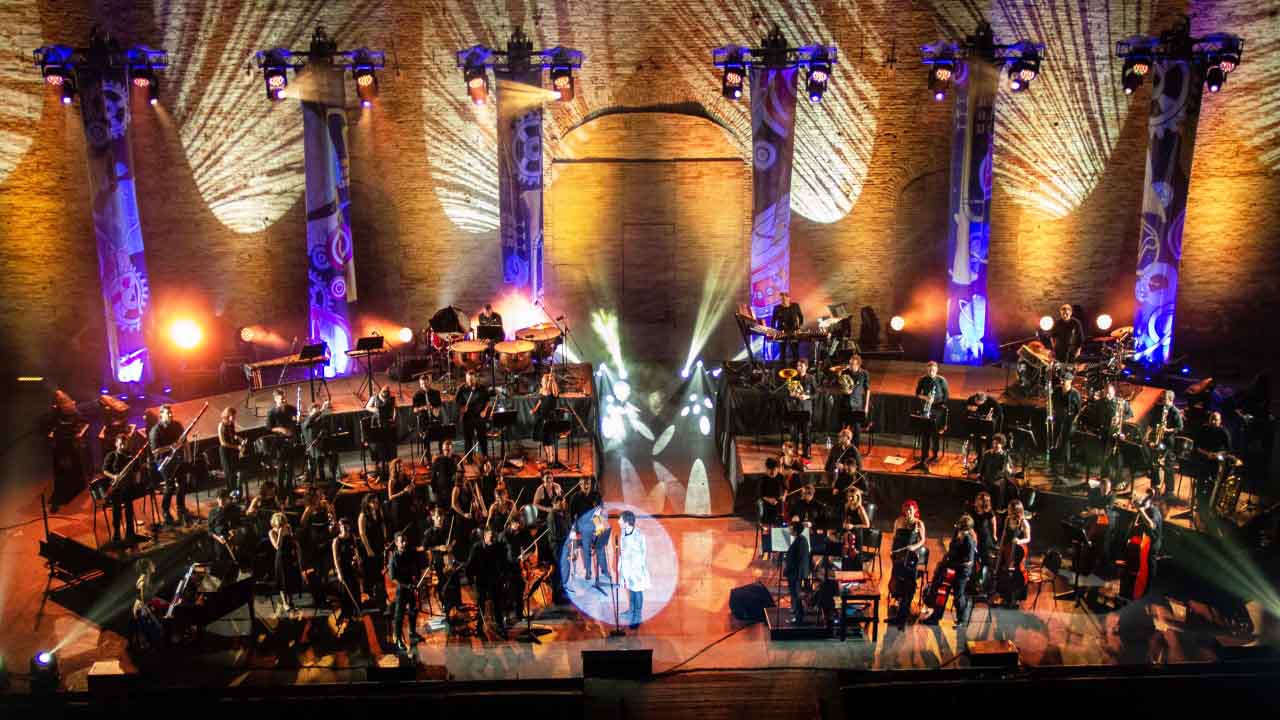
The instrument would allow me to blend the strings with the synthesizers or the piano in an extremely coherent way. A tool capable of binding the part pop rock with the symphonic one. An important injection for color and also on sustain.
Bringing together the dynamics of a symphony orchestra with those of a voice that the public does not know in that role.
The profit was immediate. In a context that had to be dry, but amalgamated, the 480L was the protagonist. Any other environment I used would have been lacking in any of the needs.
John Rome: To have an important comparison tool (basis of the technical part of this article) I needed a certain number of renderings done through the Original Lexicon 480L. Therefore I would like to thank Fabio Marulli e Luke DeGregorio of the Goddamn Studio / Camp Academy for giving me the ability to process through their Lexicon 480L.
The files were provided along with a very accurate transcription of the preset parameters I wanted to hear to allow me to align my plugin, in case their presets have been overwritten in the past.
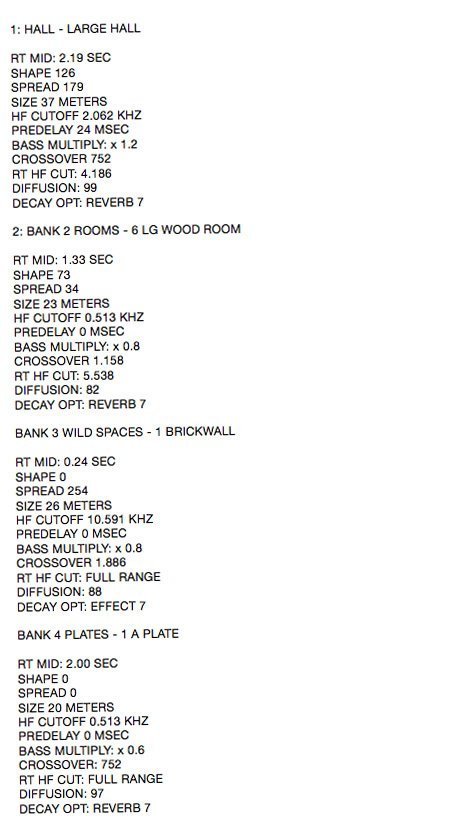
Attached to the article you will therefore find files processed by 480L and the consideration UAD. Personally I think the latter sounds very similar to the 480L. At this point someone will already be wondering: Gianni, but if they both sound alike, why not use convolutions that sound very similar?
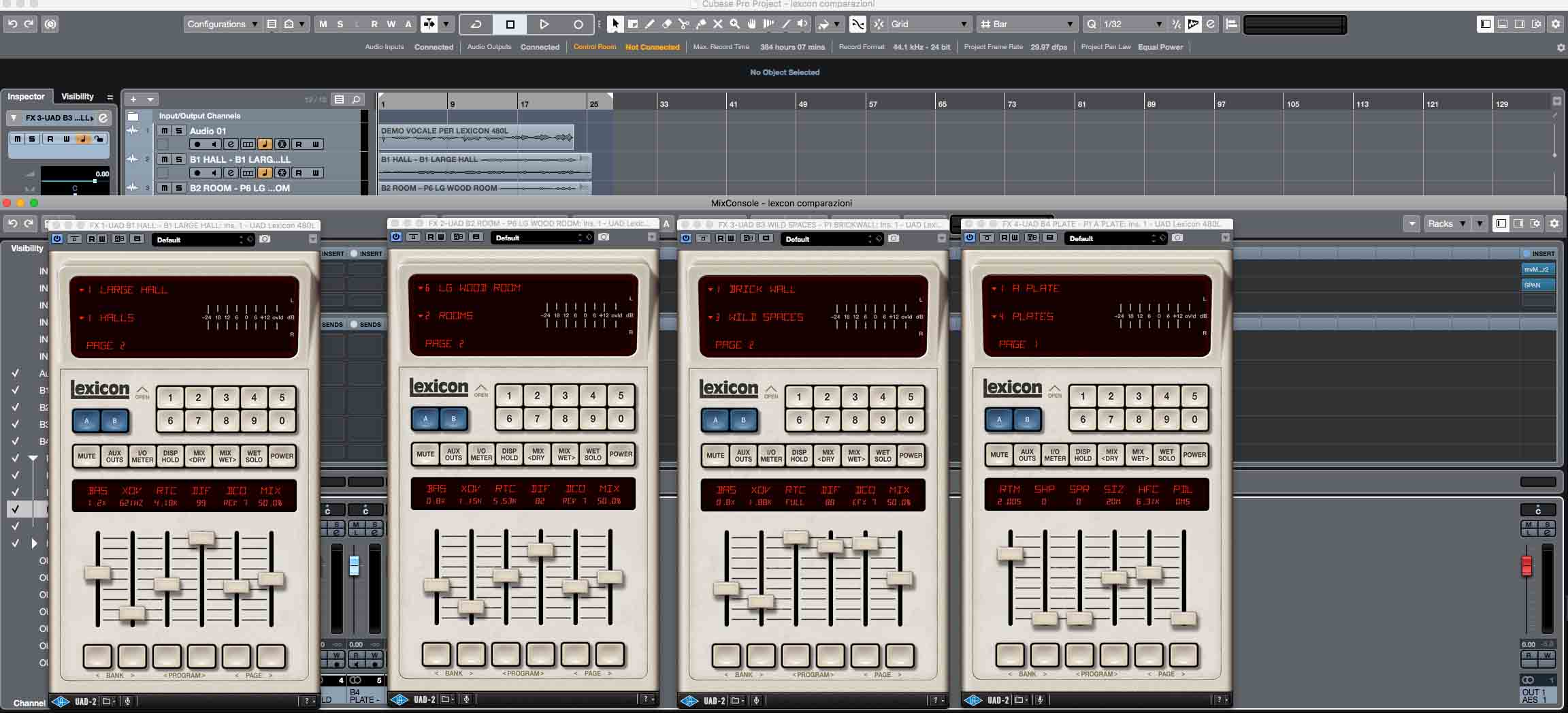
Question to which I simply answer like this: the UAD plugin is a generator, whose editing interface is identical to that of the 480L so you can think exactly as you do with the original machine. You can act with the same kind of quick interaction by sculpting the preset according to your needs, which you can't exactly do with a convolution.

In this regard, I produced a video where I browse the Lexicon 480L presets and edit them. In my opinion, the stereo image I perceived from the monitors when converting to mpeg tends to die. So for a quality review you can download the above files from the server and open them in your DAW. Find the video at the bottom of the page along with the comparison files, both of which can be downloaded. I leave the judgments to you.
I would like to thank both Massimo Aluzzi and Pepe Innaro for granting us these interviews and I take this opportunity to also thank Max Carola for the interview he gave us. It will appear in the third part of this article which will serve us to add further opinions and experiences to our cognitive journey. Thanks also to Age of Audio for hosting me and Silvio Speranza which allowed me to use The art of Studio Noises as an operational base for this research. I also thank the contribution of Massimiliano Pone of the Godfather Studio for making himself available in the search for a 480L Hardware.
See you on the next episode
John Rome


